
2/17, 4:28 PM
Wall Street Pauses AI Selloff in Choppy Start for Stocks
Amazon.com and Nvidia clawed back early losses to finish the day in the green. The three major stock indexes each rose 0.1%.
wsj.comRead Article →
Global economic updates, market sentiment, and financial headlines.

Following the volatile short squeezes in gold and silver, Nigam Arora turns his attention to the path ahead in precious metals. He remains constructive on gold and silver moving higher and offers advice to investors buying on dips, as long as you can stomach short and mid-term volatility.
Amazon.com and Nvidia clawed back early losses to finish the day in the green. The three major stock indexes each rose 0.1%.

It's a funny moment in the market because while everyone knows there are lots of stocks that have fallen too far, it is difficult to identify them.

A quarterly regulatory filing disclosed increased stakes in Google and Amazon as of the end of December.

Despite tariffs, deficits, and lingering inflation risks, investors are piling into Treasuries—pushing yields to their lowest levels of the year.

Federal Reserve governor said the job market might be “especially vulnerable to negative shocks,” given low levels of job creation and a low firing rate.

Anthropic is leading the charge in user development of autonomous agentic systems, and its Tuesday debut of Claude Sonnet 4.6 delivered another blow to software companies.

The Federal Reserve must dig deep on the data to assess whether artificial intelligence is boosting productivity growth and enabling faster economic growth without igniting inflation or requiring the Fed to tap the brakes with tighter policy, San Francisco Fed President Mary Daly said on Tuesday.

Semiconductor stocks have been a cornerstone of market rallies in recent years, driven by strong demand for chips powering artificial intelligence, cloud computing, and consumer electronics. Yet recent trading patterns suggest a subtle but meaningful shift: investors are quietly reducing exposure to the sector.

CrowdStrike, C.H. Robinson and Compass are among stocks that have been unfairly punished by fears of AI disruption, analysts say.

An apparent slowdown in inflation since last fall has eased worries on Wall Street, but skeptics are yet to be convinced price pressures have largely evaporated. A new Federal Reserve study might add to the doubts.

The Impact Of Tariffs On The Economy, The Deficit And The Consumer

BitGo has plunged since its January IPO. But analysts remain bullish on the crypto wallet firm.

Northwestern Mutual's Matt Stucky joins TheStreet to break down small caps, market rotation, AI disruption risks and his 2026 market outlook.

Artificial intelligence anxiety has driven sharp moves in retail stocks, but rising tax refunds could provide a more durable tailwind for select companies this spring.

Betting On AI Bubble Burst Is Still A Losing Proposition

Dry Bulk, specifically the Capesize vessel class, was cited as a top pick for 2026. Typically, January and February exhibit seasonal weakness.
Dan Skelly, Head of Market Research & Strategy at Morgan Stanley Wealth Management, discusses AI capex expansion and valuation pressures. A selloff in several tech giants weighed on stocks amid lingering anxiety over the outlook for artificial intelligence that has recently hammered the group as well as dozens of companies across a number of industries.
ValuEngine Weekly Market Summary And Commentary

The software sector experienced a $2T sell-off. Current market pricing assumes two mutually exclusive scenarios.

US small-cap value, international value, international core, US large-cap value, midcaps, European stocks, and even REITs have all beaten the S&P 500. From the beginning of 2000 to the peak of the next market cycle, in mid-July of 2007, the S&P 500 total return averaged just 2.4% annually.

The recent drop in unauthorized immigration to the United States has slowed employment growth, particularly in construction and manufacturing, and those trends are likely to continue, new research from the San Francisco Federal Reserve published on Tuesday shows.
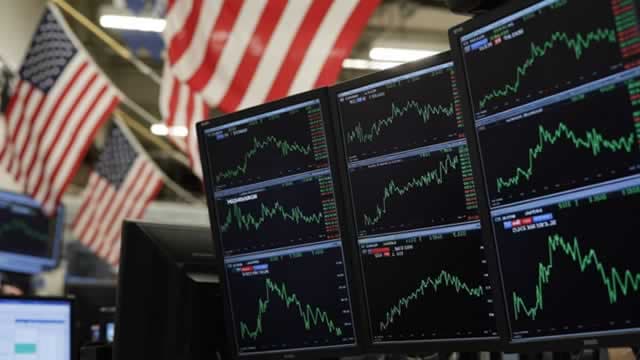
Investors are increasingly worried that massive AI investment is creating hidden risks, but some strategists argue the market's tech selloff may actually reinforce the case for continued spending.

On Tuesday, mining stocks sank ahead of an earnings season in which Wall Street expects major growth, despite sinking metals prices.

The S&P 500's trailing 10-year return remains well above the average forecast of our models. Bulls see AI, growth, and Fed cuts keeping the party alive, but valuations suggest the market's fully priced.

Global equities began the year near record highs, supported partly by continued enthusiasm around AI investment and expectations of policy easing. All of the so-called Mag 7 stocks are lower year-to-date.
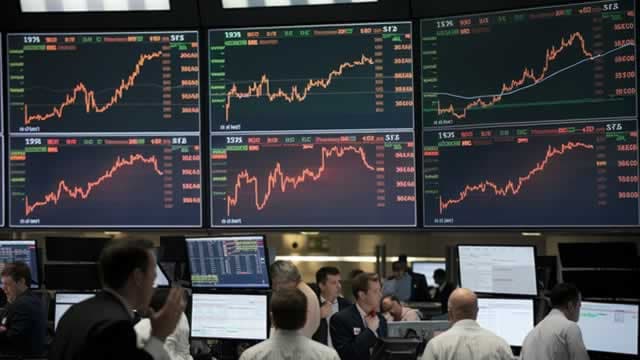
February marks a pivotal shift in market sentiment, highlighting a critical realization for investors as fears of AI disruption are pummeling different sectors of the market on a rotating basis. Fears of AI disruption are starting to hit different areas of the market on a much more frequent basis, creaming several industries last week, including wealth management firms.
US stocks slip after the long weekend as tech weakness grows, AI leaders diverge, and the S&P500 sits in a fragile technical zone watched closely by traders.

Consumer staples have surged as investors seek safety, but technical signals suggest alcohol stocks like Anheuser-Busch InBev and Boston Beer may be running out of steam.

Chicago Fed President Austan Goolsbee continued to express his view that policymakers could make several more rate cuts if inflation shows it is headed back to the Fed's 2% target.

Polaryx Therapeutics Inc. (NASDAQ: PLYX) shares are up on Tuesday as the company has made significant strides in advancing its clinical programs.

The combined company is expected to trade under the ticker XTND. Once listed, XTND would provide investors with exposure to another fast-growing vertical of AI: autonomous defense systems.
Subscribers to Chart of the Week received this commentary on Sunday, February 15.

REITs Rally As Rates Retreat

Lafayette College CIO Krishna Memani says we've been waiting for a soft landing for three years and it's finally arriving. -------- More on Bloomberg Television and Markets Like this video?

Some of the leading AI-related stocks have encountered turbulence since the fourth quarter of last year. Sparking the pullback seems partly due to the race among many of the Magnificent 7 stocks to invest in AI businesses, and doing so by taking on large amounts of debt, in part to build out data center capacity.

U.S. stocks traded mixed this morning, with the Dow Jones index gaining around 0.1% on Tuesday.

As expectations of a “liquidity expansion stall” harden into consensus, markets are shifting from broad beta to sharp "cross-sectional dispersion" and "hotspot trading". With “liquidity expansion stall” becoming a working consensus, pricing power tends to migrate away from macro beta and towards relative winners and losers.

Kevin Hincks says there's a lot to watch when it comes to economic data on this shortened holiday week. Keep an eye out for anything, from Tuesday's delayed retail sales print, to Friday's GDP report.

CNBC's Steve Liesman and Chicago Fed President Austan Goolsbee join 'Squawk Box' to discuss the state of the economy, the Fed's inflation fight, interest rate outlook, his thoughts on Fed chair nominee Kevin Warsh, and more.

Over the past several years, buying the S&P 500 and Nasdaq has proven to be an extremely effective strategy. However, a massive rotation is quietly unfolding beneath the surface of the indexes.

Consumer price pressures in Canada eased slightly in the first month of the year as prices at the pump fell sharply.

Jack Janasiewicz says the market is no longer willing to give a "free pass" to Mag 7 companies and others spending on AI capex buildouts, adding the market is rewarding winners and punishing losers. Jack points to the rotation in to "old economy" sectors like Staples as a way to get out of the AI trade, but he's hesitant to say the markets are in a late cycle of the bull market.

Scott Bauer (@ProsperTradingAcademy) kicks off Tuesday's coverage with his eyes on a few potential market-moving events this week. First, he's watching developments on the U.S./Iran talks as they continue, particularly the impact on the energy commodity space.

Tariffs have not derailed the economic expansion, as AI-driven capital spending has offset manufacturing headwinds. Companies are absorbing most tariff costs, but consumers still face higher prices, with household tariff costs projected to rise to $1,300 in 2026.

US stock futures were in the red on Tuesday, with Wall Street reopening after the long weekend with investors still grappling with the recent pullback in technology shares. Losses are expected to be led by the tech-heavy Nasdaq, where futures were down 0.8%, the S&P 500 down 0.4% and Dow Jones down 0.2%.

Many of the top-performing AI stocks last year have retreated. But there are bright spots.

Despite ongoing carnage affecting companies with exposure to AI technology development costs, the S&P 500 managed to eke out a small gain in the trading week ending on Friday, 13 February, 2026. The index closed out the week at 6,836.17, down 96.13 points, or 1.39%, from the preceding week.

I see a powerful convergence of industrial recovery, maturing AI, and broad-based economic growth, making this my favorite market setup since 2011. My portfolio is heavily tilted toward cyclicals—industrials, energy, housing, and transportation—capitalizing on a full-blown industrial renaissance and AI-driven CapEx cycle.