Warning: This AI-Driven Sell-Off Could Be Just Beginning
AI is breaking moats, and digital leaders are already down 20–80% as competition surges. SaaS was likely just the first domino, with broader industries now at risk.
Global economic updates, market sentiment, and financial headlines.

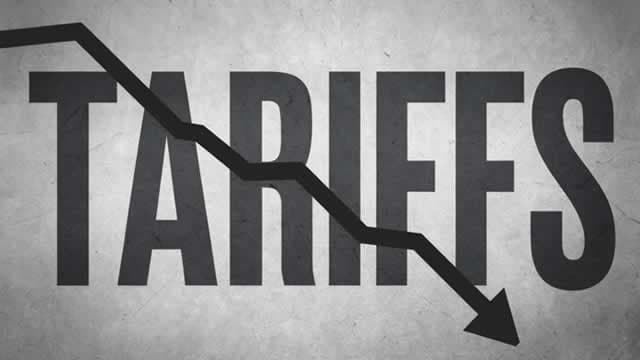
Lower tariffs would be welcome, but other factors are keeping markets at bay.

AI is breaking moats, and digital leaders are already down 20–80% as competition surges. SaaS was likely just the first domino, with broader industries now at risk.

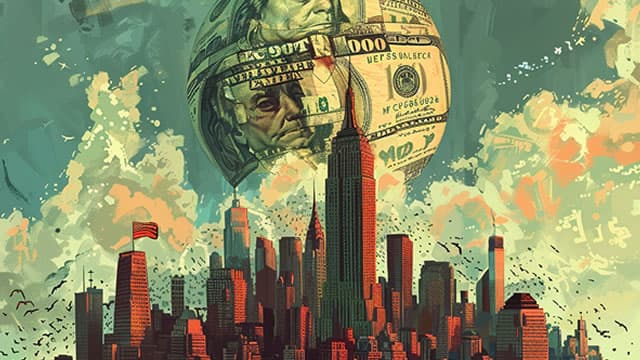
Policy decisions have fueled a bull market, which has enriched asset holders and driven consumer spending. But market cycles haven't been permanently repealed.

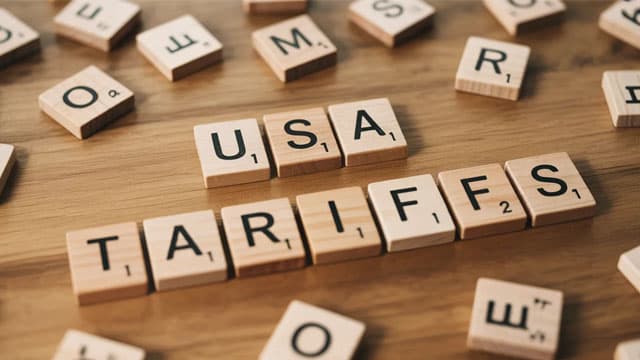
President Donald Trump said he would impose a 10% global tariff, over and above tariffs already being charged, under Section 122 and declared all national security tariffs under Section 232 and existing Section 301 tariffs to be in full force and effect. Trump spoke Friday at a White House press conference after the US Supreme Court struck down the Trump administration's global tariffs.

US economic growth drastically slowed at the end of 2025, while the Fed's preferred inflation gauge heated up – complicating the path to more interest rate cuts, according to economic reports released Friday.

"Bloomberg Real Yield" highlights the market-moving news you need to know. Today's guests: Franklin Templeton Fixed Income CIO Sonal Desai, Wells Fargo Head of Macro Strategy Mike Schumacher, Morgan Stanley Chief Fixed Income Strategist Vishy Tirupattur and CreditSights Global Head of Credit Strategy Winnie Cisar.

Trump to impose a new 10% global tariff following SCOTUS ruling on IEEPA tariffs.

Target, Nike and Hasbro stand to be big beneficiaries as the SCOTUS ruling could lower costs, analysts say, but stocks of retail giants like Walmart and Costco fell.

President Donald Trump said he will sign an executive order imposing a new 10% “global tariff” under Section 122 of the Trade Act of 1974. Trump was defiant following a major Supreme Court defeat, saying he will find other ways to impose global tariffs that were struck down.

The stock market was mixed this week on Walmart, Iran and private credit concerns. But the Friday Supreme Court's Trump tariff ruling helped.

President Donald Trump says other alternatives “will now be used to replace the ones that the court incorrectly rejected" during a news conference following the Supreme Court's decision to strike down the Trump administration's tariffs. -------- More on Bloomberg Television and Markets Like this video?

Trump: "The Supreme Court's ruling on tariffs is deeply disappointing."

Tariff Slapdown: What The Markets Say

Suddenly, tech stocks are struggling and a variety of out-of-favor sectors--value, small-caps, overseas, dividends, manufacturing—are hot. Why trying to do everything at once is so difficult.

The administration may have to refund part, or perhaps even all, of the money paid under tariffs so far following the Supreme Court decision, Sky's Ed Conway says.

President Donald Trump raged at the Supreme Court majority that struck down the centerpiece of his economic agenda, sweeping tariffs imposed on countries worldwide.

tocks whipsawed while bonds fell alongside the dollar after the Supreme Court's rejection of Donald Trump's tariffs. Crypto, gold and oil mostly hovered as traders sought to assess the president's plans for a program that sent markets careening when first announced last year.

The proposed ETFs are all tied to prediction markets related to U.S. elections.

Dallas Federal Reserve President Lorie Logan said on Friday that while she expects inflation pressures to ebb as tariff impacts on the economy wane, she's not yet prepared to say what the next move for monetary policy should be.

Because of Blue Owl, concerns over private BDCs have spilled over to push down prices of publicly traded BDCs — many of which trade at large discounts to their reported asset valuations.

The 6-3 ruling against Trump's decision to unilaterally impose tariffs without congressional approval was called a ‘disgrace' by the president

Welcome to another Friday. Apologies for those that were waiting and waiting for this morning's Wall Street Breakfast. We hope we can make it up to you with this extended version of Wall Street Roundup going into your weekend. So thanks for understanding and enjoy this episode and enjoy today's episode.

President Trump is considering a direct attack on Iran. Oil markets began to anticipate this some weeks ago when the President ordered the aircraft carrier USS Gerald R.

Growing tensions between the U.S. and Iran will continue to be a major focus for investors in the week ahead, as will be the impact of the U.S. Supreme Court's decision to strike down President Trump's global tariffs.

President Donald Trump is set to respond after the Supreme Court struck down his signature tariff policy. The high court ruled, six to three, that the statute used to justify Trump's biggest tariffs does not actually authorize those import duties.

The Supreme Court's decision striking down most of President Donald Trump's tariffs left at least one big question unanswered: What about refunds?

The Supreme Court's decision puts into issue billions collected in tariffs over the past year.

The Supreme Court's decision puts into issue billions collected in tariffs over the past year.

The central theme of 2025 was the disconnect between market sentiment and economic reality. The year began with widespread apprehension regarding aggressive tariffs and forecasts of a recession.

The US Supreme Court has ruled that former President Donald Trump exceeded his authority by imposing broad tariffs on Canada, Mexico, and other countries under emergency powers, striking down a key component of his trade and economic strategy. In a 6‑3 decision in Learning Resources, Inc.

President Donald Trump's so-called "reciprocal" tariffs were deemed unconstitutional by the Supreme Court, but some sector-specific tariffs will remain in place. The Supreme Court ruling covered IEEPA tariffs, used for national emergencies outside of the U.S., while Section 232 tariffs are levied on specific products that threaten national security.

The fog of the Trump administration's tariffs is unrelenting. The Supreme Court's rejection of them creates even more confusion and uncertainty.

Private-sector activity in the U.S. slowed in February as tariffs drove costs higher for firms, while Europe expanded at a stronger pace than anticipated due to a rebound in industry.

The US Supreme Court struck down the Trump administration's global tariffs. In a 6-3 ruling, the court said President Donald Trump exceeded his authority, with Chief Justice John Roberts writing for the majority.

Lawmakers in the EU, U.K. and Canada are reacting to the U.S. Supreme Court's ruling against President Donald Trump's far-reaching tariffs. Trade bodies welcomed the move, but warned of lingering uncertainty and "other options" at Trump's disposal.

CNBC's Eamon Javers joins 'Squawk on the Street' to discuss the U.S. Supreme Court's ruling on tariffs and its implications for businesses and the global economy.

Georgetown Law Professor Jennifer Hillman calls the Supreme Court ruling on President Donald Trump's tariffs a victory for the US Constitution. The court said that Trump exceeded his authority by invoking the International Emergency Economic Powers Act to justify his sweeping “reciprocal” duties targeting America's trading partners, as well as separate levies aimed at China, Canada and Mexico.

The Supreme Court rules against Trump, but his administration has been working on Plan B.

Companies will likely now scramble to recover what they paid, while the broader economic impact may be hard to gauge.

Senator Chuck Schumer, a Democrat from New York, calls the Supreme Court ruling on tariffs a victory for consumers' wallets. Annmarie Hordern reports.

The U.S. economy got sidetracked in February by tariff-related price increases, sluggish sales and the previous month's Winter Storm Fern, but top executives were also more optimistic that business will improve later in the year.

Thousands of businesses won a hard-fought victory when the U.S. Supreme Court ruled to overturn the White House's emergency tariffs. The process of getting refunds has only just begun.

The US Supreme Court struck down President Donald Trump's global tariffs, saying he exceeded his authority. Bloomberg's Nathan Dean and Mike McKee discuss how President Trump may respond to the decision on "Bloomberg Open Interest."

President Trump is the first to invoke the International Emergency Economic Powers Act of 1977 to set tariffs on imported goods from more than 100 countries.

All three major stock indexes were up Friday morning after the Supreme Court struck down President Donald Trump's sweeping tariff agenda, and despite the economy notching its slowest economic growth of the past three quarters.

The U.S. government could owe more than $175 billion in refunds to importers after the Supreme Court ruled in a 6-3 decision that tariffs unilaterally imposed by President Donald Trump are illegal, a new estimate says. The potential refunds to a broad range of companies would be for tariffs already collected by the government since Trump slapped on the duties without authorization from Congress under the International Emergency Economic Powers Act, or IEEPA.

The Supreme Court has struck down President Donald Trump's far-reaching global tariffs, handing him a significant loss on an issue crucial to his economic agenda.

The US Supreme Court struck down President Donald Trump's global tariffs. John Stoltzfus of Oppenheimer talks about how the ruling could impact markets.

Sales of new single-family homes rose to 758,000 in November, from 656,000 in October, and slipped to 745,000 in December.