
2/23, 4:15 PM
Bitcoin Falls on Uncertainty Fears After Tariffs Ruling
Bitcoin drops below $65,000 due to anxiety over corporate profits and uncertainty over US tariffs. Emily Nicolle reports on Bloomberg Tech.
youtube.comRead Article →
Global economic updates, market sentiment, and financial headlines.

Gap, Aritzia and Urban Outfitters are among apparel retailers that should see margins expand, with the US' global tariff set at 15% -- vs. an average 20% for the sector -- after the Supreme Court struck down President Donald Trump's sweeping levies.
Bitcoin drops below $65,000 due to anxiety over corporate profits and uncertainty over US tariffs. Emily Nicolle reports on Bloomberg Tech.

Nevada Attorney General Aaron Ford says President Donald Trump overstepped his authority when it came to tariffs. He says he was not surprised by the Supreme Court's ruling.

The US is experiencing near-historic underperformance relative to the rest of the world so far this year. The US S&P 500 (SPY) is basically unchanged YTD following today's declines, whereas the rest of the world (ACWX) is closing in on a double-digit gain.

UK businesses are facing uncertainty and higher costs as Donald Trump's new global tariff hike is set to take effect from Tuesday.
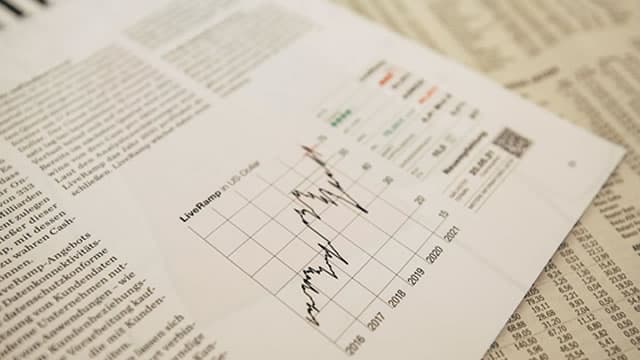
The Supreme Court struck down Trump's tariffs, but we expect the Office of the US Trade Representative to pivot to a plan B. Tensions have been rising, but we don't expect these developments to derail global stock markets or end the business cycle.
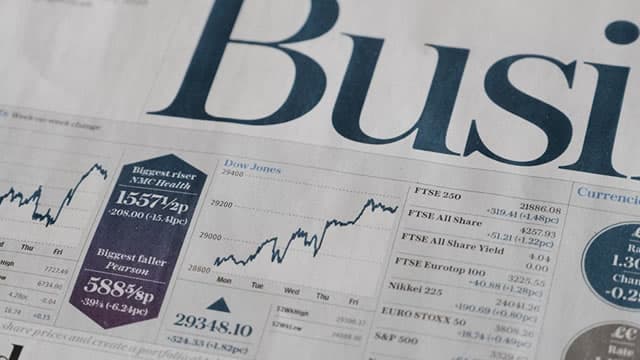
Nassim Taleb, author of “The Black Swan” and distinguished scientist at Universa Investments, warns that markets are underpricing structural risks while overestimating the durability of recent AI leaders. Speaking with Bloomberg's Natalia Kniazhevich, Taleb also weighs in on US tariff policy and the market impact of increasing tensions between Iran and the US.

There's plenty of money on the sidelines that could move into stocks Investors keep on building their cash war chest. Assets in money market funds currently stand at $7.7 trillion—which equals roughly one-tenth of the size of the entire U.S. stock market—down just slightly from their all-time high of $7.

US stocks fell in the wake of tariff tumult that saw the Supreme Court cancel a key part of President Trump's tariff policy — only for him to vow new levies over the weekend — stoking fresh trade jitters as investors dumped companies seen as potential AI losers.

Section 122 Tariffs: Presidents can implement tariffs under Section 122, like the ones Trump imposed in the wake of the court's ruling, “to deal with large and serious United States balance-of-payments deficits,” or to stop the U.S. dollar from plummeting in foreign exchange markets. The tariffs are capped at 15% and cannot be in effect for more than 150 days, meaning they're more limited than the IEEPA tariffs.
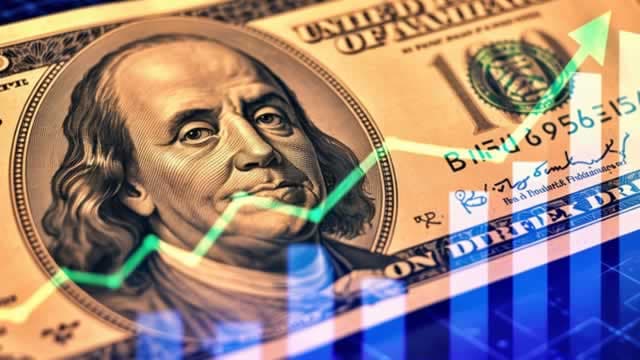
After a turbulent start to 2025 that included a roughly 20% drawdown in two months, followed by an aggressive rally of around 45% off the April low, investors heading deeper into 2026 are dealing with a market that has reminded everyone just how fast conditions can shift.

Gibbens Capital Management CIO Mark Gibbens breaks down where he sees opportunity in a volatile market, from AI and tech to banks and small caps—and why this pullback may be creating long‑term winners. 00:00 Introduction 00:08 Tariffs & Market Outlook 01:05 Buying the Dip Strategy 01:27 Tech Rotation Shift 02:38 Current Buying Opportunities 03:54 Nvidia Earnings Impact 04:35 AI Race Leaders 05:23 JPMorgan & Financials 06:35 Shopify Opportunity 07:34 Gold vs.
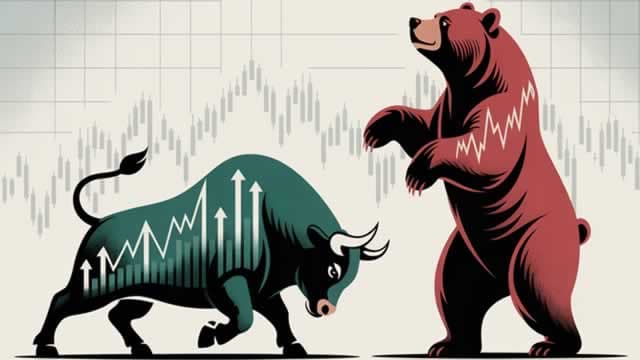
The Substack post envisions an economy in 2028 in which AI has triggered mass layoffs and disrupted large-cap stocks like DoorDash and Uber.

Jason Oxman, president and CEO of the Information Technology Industry Council, says the tech industry needs certainty around tariffs in order to invest in AI. Oxman discusses the current tariff landscape with Caroline Hyde and Ed Ludlow on “Bloomberg Tech.

US stock benchmarks retrace to start the week as tariff uncertainty reigns. Indexes remain at inflexion points and will face key tests this week.
ETF Action Founding Partner Mike Akins joins CNBC's Dom Chu on ‘Halftime Report' to discuss the new dichotomy in the world of ETF investing, and which side is poised to emerge as the winner.

For years, retail investors were dismissed by some on Wall Street as “dumb money.”That typically referred to those prone to trading on hype, or chasing trends rather than company or industry fundamentals, or responding late to big market moves.That's no longer the case.

Monday marks the first trading session since Trump announced he would raise his 10% global tariffs to 15% on countries that have been “ripping the U.S. for decades, without retribution.” Officials from the European Union said Monday the bloc would halt its trade deal in response.
A leading Federal Reserve official says that employment in the U.S. likely declined last year. Data from the Bureau of Labor Statistics (BLS) showing that job creation dropped to an average of 15,000 new positions a month last year contained an “upward bias,” Fed Governor Chris Waller said at a National Association for Business Economics conference Monday (Feb. 23).
Bitcoin drops below $65,000 due to anxiety over corporate profits and uncertainty over US tariffs. Emily Nicolle reports on Bloomberg Tech.

Last week's troubles at Blue Owl put the focus back on the private credit markets, an area prudent investors should be monitoring closely for further deterioration. Recent credit market shocks follow last summer's TriColor and First Brands bankruptcies, which triggered write-offs at banks.

The winter storm hitting the East Coast Monday led airline stocks to sink while Airbnb and Expedia also fell.

"Bloomberg ETF IQ" focuses on the opportunities, risks and current trends tied to the trillions of dollars in the global exchange traded funds industry. Today's guests: Davis Select US Equity Portfolio Manager Chris Davis, YMX VettaFi Investment Strategist Cinthia Murphy, Proshares Global Investment Strategist Simeon Hyman, and JPMorgan Asset Management Global Head of ETFs Travis Spence.
The Investment Committee debate how to trade the market's reaction to the Supreme Court's ruling against Trump's tariff's last week.
The EU assembly has been debating legislative proposals to remove many EU import duties on US goods, a key part of the deal struck last July.

Every market cycle creates a new group of instant experts who promise you the next hot trade, the next AI moonshot, or the one stock that will make you rich by Friday afternoon.

Rapid advances in artificial intelligence are forcing investors to rethink earnings forecasts, pricing power, and the long-term outlook for U.S. tech.

A Triad Of Risk Factors Stalks Markets This Week
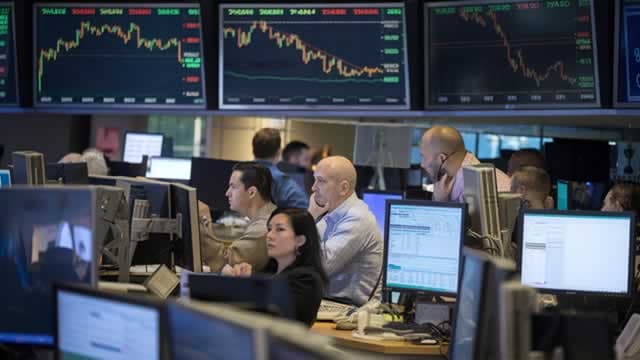
President Donald Trump is expanding his tariff toolkit in the wake of a Supreme Court ruling against his signature economic policy.
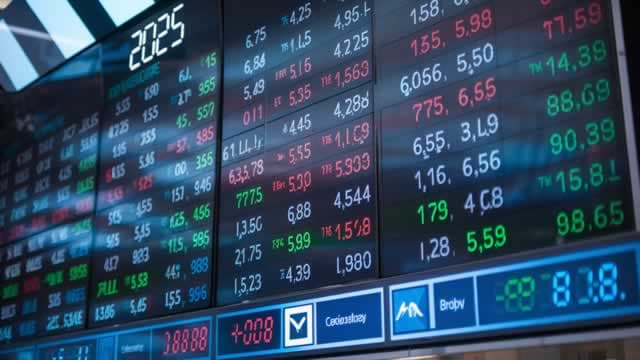
US president's international trade war spooks investors, with drops in US share prices after European losses

President Donald Trump opened up a new round of verbal attacks against the Supreme Court on Monday, just days after the high court struck down his sweeping tariff program. The situation was creating an uneasy environment for investors in U.S. assets.
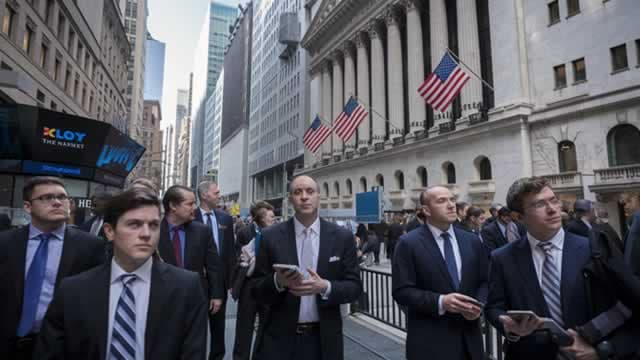
@CharlesSchwab's Cooper Howard talks about the tariff narrative's impact on fixed income after the U.S. Supreme Court ruled the Trump administration's IEEPA tariffs unconstitutional. He expects a short-term impact though sees a floor having already been set due to inflation and employment concerns ahead.
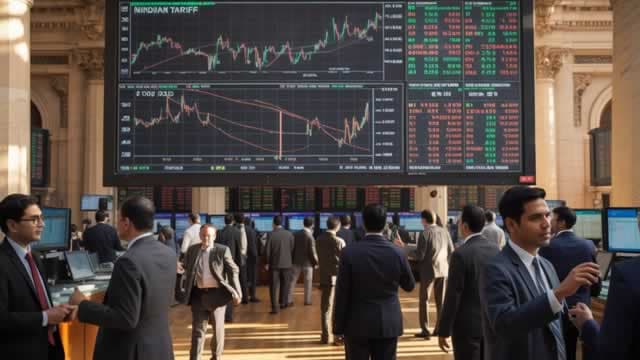
Active management strategies designed for the core holdings of investment portfolios could help investors capture returns that passive index funds leave on the table, according to new research from T. Rowe Price.

Only a few weeks ago, Christopher Waller dissented from his colleagues in favor of cutting interest rates. Now he is calling the next decision a coin flip.

President Trump is already working to piece his tariff program back together, after a Supreme Court ruling ruptured a centerpiece of his economic agenda.

Global markets are heading into a week shaped by a mix of trade policy uncertainty, key corporate earnings, and economic data. Following last week's US Supreme Court decision striking down the Trump administration's previous tariff measures, attention has turned to how the administration plans to replace the revenue stream.

Europe has warned that trade deals struck with the U.S. could now be at risk after President Donald Trump unveiled a new global 15% tariff on all imports at the weekend. Trump's move came after the U.S. Supreme Court on Friday struck down his global tariffs policy, implemented last spring, that had upset the long-standing global trading order.

Wall Street Journal Editor-in-Chief Emma Tucker joins 'Mornings with Maria' to react to the Supreme Court's tariff ruling, cartel violence in Mexico and rising Iran tensions.

Tech Insiders Buy The Dip Even As The Market Panics

CNBC's Rick Santelli breaks down the latest economic data to cross the tape.

A weaker-than-expected factory orders print is one Kevin Green doesn't see moving markets much. What he believes will: tariffs.

All three major US indexes breach their 50-day moving averages Monday. S&P 500, Nasdaq and Dow face key support levels as selling pressure builds across the board.

Liquidity is the primary driver of asset prices across stocks, bonds, and real estate. Global liquidity conditions are tightening, posing downside risk to U.S. asset prices in coming years.

New orders for U.S. factory goods fell in December amid a sharp decline in commercial aircraft bookings, but demand elsewhere was strong, partly driven by robust investment in artificial intelligence.

Stock markets are still enjoying 'Goldilocks' conditions, according to JPMorgan, which reckons non-US stocks can continue to outperform in the coming months. Despite the US military build-up around Iran and US tariffs being reset, the bank argues the growth-inflation mix remains attractive for equities in 2026.

In my view, AI-disruption fears are overblown. Software growth already slowed from mid-2021 to end-2022 after a pandemic pull-forward tailwind.

Orders from U.S. factories fell 0.7% in December to $617.5 billion, from $621.9 billion in November. Economists polled by The Wall Street Journal were expecting a 0.2% increase.

''More is required for us to understand the full picture here,'' EU Commission Spokesperson Olaf Gil says.