2/28, 2:45 AM
U.S. Earnings Season Ends On Strong Note
Q4 earnings growth in U.S. remains robust. Equity leadership broadens beyond U.S. large caps.
seekingalpha.comRead Article →
Global economic updates, market sentiment, and financial headlines.
Blue Owl's 2.4% decline this week pushed y-t-d (2-month) losses to 29.4%. The KBW Regional Bank Index was clobbered 7.1% this week, with losses from February 9th highs at 10.0%.
Q4 earnings growth in U.S. remains robust. Equity leadership broadens beyond U.S. large caps.
Shares in US insurers were less impacted by the broader market's volatility that came in the wake of a US Supreme Court decision striking down President Donald Trump's sweeping tariffs. Apart from some specific managed care and insurance technology players, most listed US insurers shrugged off the Supreme Court decision, with the S&P Global insurance index rising 0.62% from Feb. 20 through Feb. 26.

Big banks are benefiting from the boom in data center construction, as they can accommodate the capital needs of hyperscalers and have investment banking arms that can run securitization offerings. Smaller banks can participate in the trend as well, via syndicated loans and by lending to companies that work on more modest projects.

The Dow Jones Industrial Average is barely hanging on to a gain for the month (+0.05%). If the gains for February hold, it would be just the sixth double-digit monthly winning streak in the Dow's history.
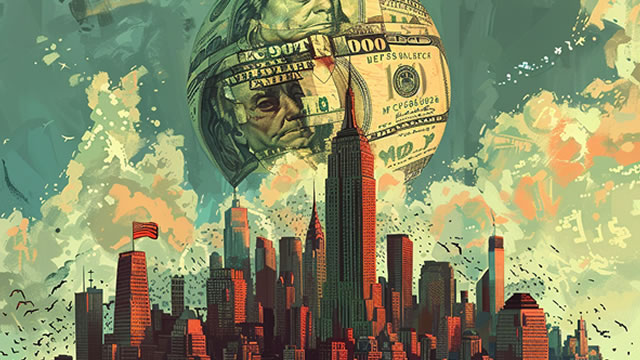
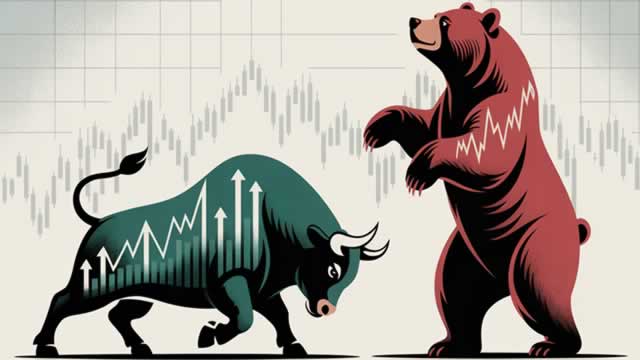
Markets remain volatile with anxiety heightened by financial sector weakness and recent defaults among private equity and tech firms. After cryptocurrencies, tech/software, and semiconductors, a more concerning wave is gripping financial markets.

US stock benchmarks got it harsh at the open after 1% gaps lower across the board. Dip buyers are coming back heavily, leading to a strong rebound towards midday.
Trade escalation and a hotter PPI print reintroduced policy uncertainty and pressured rate expectations, driving sharp rotations across sectors and market caps. AI infrastructure leaders delivered outsized growth and multibillion-dollar deployment deals, while disruption fears compressed software multiples - despite Nvidia's Jensen Huang arguing investors are misreading AI's impact on applications.

The U.S. tariff situation might be going from bad to worse. The biggest economic risk may have nothing to do with politics.

'Mad Money' host Jim Cramer looks ahead to next week's market moving events.

Bloomberg Television brings you the latest news and analysis leading up to the final minutes and seconds before and after the closing bell on Wall Street. Today's guests are Robinhood Markets' Stephanie Guild, Generate:Biomedicines' Mike Nally, S&P Global's Simon Gallagher, Inflation Insights' Omair Sharif, Lightshed Partners' Rich Greenfield, Fidelity's Jurrien Timmer, Institute for Advance Study's Alondra Nelson, Hornets Sports and Entertainment's Shelly Cayette-Weston, Raising Cane's Aj Kumaran, and Carnegie Endowment for International Peace Senior Fellow Aaron David Miller.

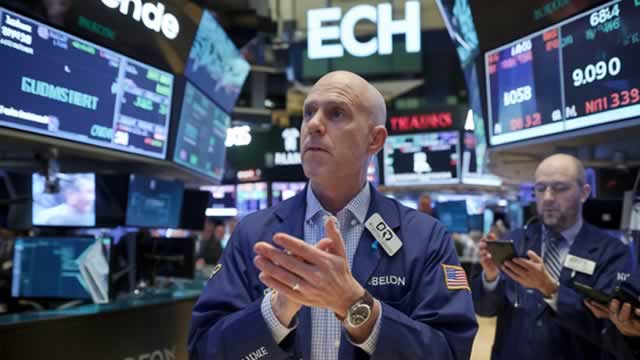
Stocks were caught up Friday in a whirlwind of market-moving headlines, making for a wild final trading day in a rough month for U.S. equities.

Morgan Stanley Private Wealth Management's Katerina Simonetti joins 'Fast Money' to talk the impact of AI on various sectors, the impact of inflation data on markets, and more.
When Federal Reserve Chair nominee Kevin Warsh joined the Fed in 2006, the central bank had less than $850 billion in assets. It now has $6.6 trillion, or nearly eight times more.

Comprehensive cross-platform coverage of the U.S. market close on Bloomberg Television, Bloomberg Radio, and YouTube with Romaine Bostick, Bailey Lipschultz, Carol Massar and Tim Stenovec. -------- More on Bloomberg Television and Markets Like this video?

Stocks are falling, inflation is growing, the Fed may be hamstrung. What else could go wrong?
The stock market, including the Dow Jones, fell Friday as an inflation reading came in hot. President Trump issued an Iran threat.

The S&P 500 and the Nasdaq composite fell in February, dragged down by firms whose businesses might be disrupted

Warren Pies, 3Fourteen Ventures, joins 'Closing Bell Overtime' to talk why he is bearish on the markets due to the impact of AI on labor.

Oil prices turned higher Friday after nuclear negotiations between the U.S. and Iran stalled. Pakistan, Afghanistan go to war.

The macro environment has shifted from disinflationary to inflationary since 2022, with bonds signaling long-term inflation risk. Short-term and intermediate Treasury bonds offer interim opportunities, but when the inflationary macro kicks back in, bonds will not be desirable.
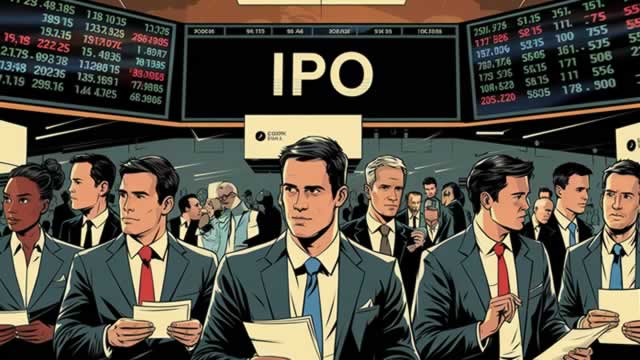
SpaceX is targeting filing confidentially for an initial public offering as soon as next month, according to people familiar with the matter. Bailey Lipschultz has more on "Bloomberg The Close.

The disruptive potential of AI has rattled markets for weeks in what traders are calling the "AI scare trade." Among the companies hit hardest were trucking and logistics stocks, which tanked after Algorhythm, a former karaoke company, said that its AI logistics platform is helping to make trucking more efficient.

The S&P 500 Index slipped 1% in February, but SMID-caps and international equities delivered strong positive returns, highlighting the value of diversification. Bond markets rallied with AGG up nearly 2% as Treasury yields fell to multi-month lows, while high-yield spreads widened on private credit concerns.
The Dow Jones Industrial Average is beating the tech-heavy Nasdaq Composite so far in 2026.
Consumer lenders—more vulnerable during economic recessions—were among the market's worst performers on Friday, including American Express.

Historically, emerging technologies have transformed industries instead of eliminating them. Neena Mishra believes the same situation is underway with AI, which means today's skepticism is a remarkable opportunity for shrewd investors.
Worries over the destructive impact of artificial intelligence on the U.S. economy were sweeping through the $30 trillion bond market on Friday.
"Bloomberg Real Yield" highlights the market-moving news you need to know. Today's guests: Société Générale Americas Head of Research Subadra Rajappa, JPMorgan Asset Management Fixed Income Portfolio Manager Kelsey Berro, and Barclays Global Head of Debt Capital Markets Meghan Graper.
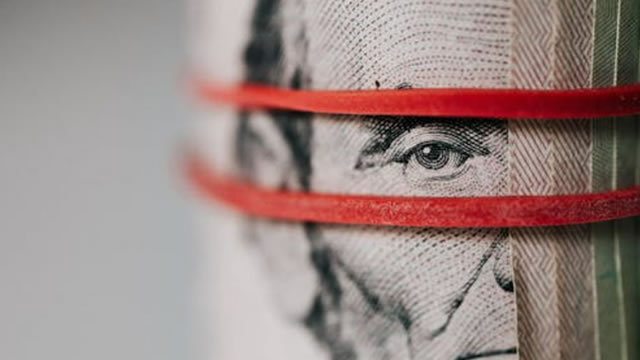
Block's layoffs exacerbated concerns that artificial-intelligence could decimate employee counts and hurt demand for software.

The latest round of financial results is one bright spot that might carry stocks to new highs, despite this year's turmoil.
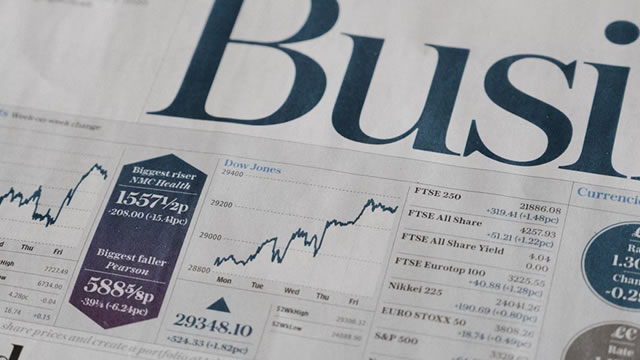
January's Producer Price Index from the Bureau of Labor Statistics came in hotter than expected. For businesses navigating tariff swings and fragile global supply chains, rising service margins signal that cost pressure is rippling through logistics and distribution channels.
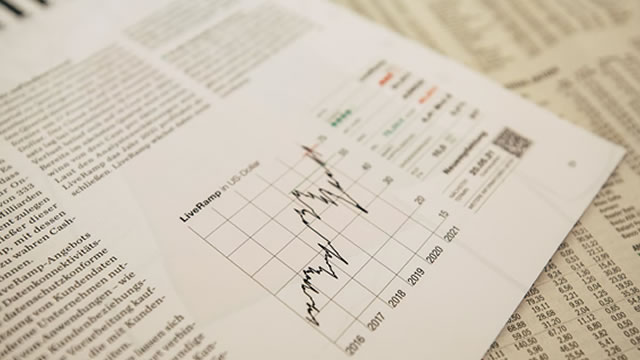
It was a whipsaw week of price action for all three major indexes, as investors endured increased geopolitical tensions, AI sustainability pressure , and a lackluster earnings response from market-moving Nvidia (NVDA).

US retailer's decision comes as RFK Jr and Maha movement increase pressure on food industry to drop dyes like red 40

Jack Dorsey is not the first chief executive to say artificial intelligence will transform work. He may be among the first to act as if it already has - and to say so openly.

Growing fears of AI disruption have been a key theme here in February, with the SaaSpocalypse hitting the software sector hard. The recent SCOTUS decision around tariffs put tariff policies in turmoil, and that uncertainty will remain with the markets for the time being.
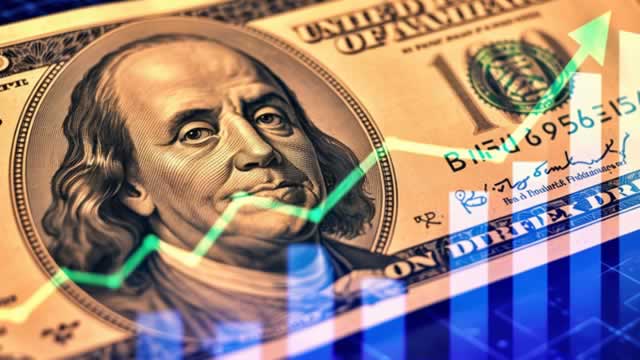
U.S. wholesale prices came in hotter than expected last month. The Labor Department reported Friday that its producer price index, which measures inflation before it hits consumers, rose 0.5% from December and 2.9% from January 2025.
“Positive,” according to an unnamed senior U.S. official who spoke to Axios, which reported Omani Foreign Minister Badr Al Busaidi, a mediator in the negotiations, said the talks have shown “significant progress.” Al Busaidi is meeting with Vice President JD Vance and other U.S. officials in Washington on Friday, with negotiations slated to continue next week.
Publicly traded private equity stocks are taking it on the chin again today, continuing an extremely rough stretch for the group that began in early January. The reason for the recent plunge: fears of overexposure to software companies that are suddenly at risk of extinction from AI.
Stock market returns are broadening out Technology stocks' stranglehold on U.S. markets appears to be easing—a welcome development for stockpickers and diversified investors. Soaring shares of AI and other tech companies have fueled strong stock gains in recent years, while other sectors have languished.
It can seem like a nothing-to-buy market. But there are solid stocks out there.

Around 40% of private credit loans are concentrated in the software industry, which is under stress due to AI disruption, and this points to widespread defaults. Large banks are exposed; they lend to private credit via "creative financing schemes" like PIK.
Despite strong results and the accelerating 2026 AI data-center buildout—of which Nvidia remains the primary beneficiary—the stock has been stuck in the mud for months.

Friday's news did little to revive Trump Media stock.
Right now, the market is sending mixed signals. Cyclicals have led this year as some investors bet on faster growth.

Yields on 10-year Treasury notes fell below 4% for the first time since November this week.
U.S. jobs data will mark the highlight of the coming week as investors remain uncertain about when the Federal Reserve is next likely to cut interest rates.
Tech shares faced selling pressure this month as concerns over high valuations and the uncertain payoff from Big Tech's massive AI spending grew.

Fears of an AI bubble are drawing comparisons with the dot-com era, when a hot tech trend led to a stock market crash. Here's what to watch out for.