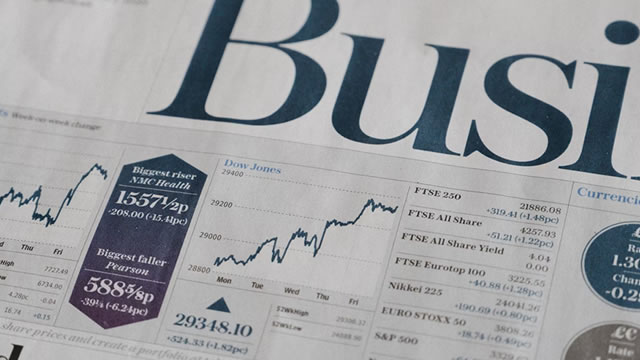
S&P 500 Snapshot: Lowest Close Of 2026
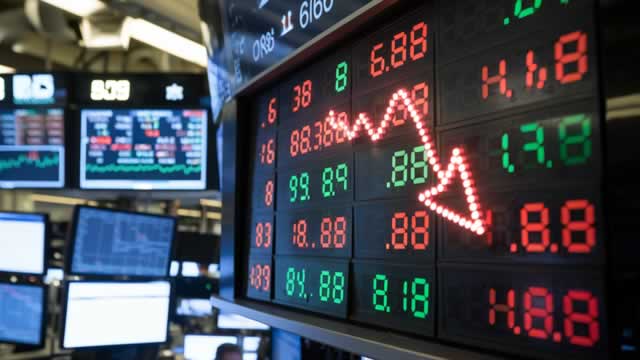
The S&P 500 finished the week at its lowest close since mid-December. Over the past 20 days, the average percent change from the intraday low to the intraday high is 1.22%.
Global economic updates, market sentiment, and financial headlines.

Central bankers and economists warn prolonged conflict could raise retail prices and rip up growth forecasts

The S&P 500 finished the week at its lowest close since mid-December. Over the past 20 days, the average percent change from the intraday low to the intraday high is 1.22%.

Apollo chief economist Torsten Slok analyzes how a weak jobs report affects markets and the Federal Reserve rate cut decisions on ‘Barron's Roundtable.' #fox #media #breakingnews #us #usa #new #news #breaking #foxbusiness #barronsroundtable #economy #jobsreport #labormarket #federalreserve #interestrates #inflation #markets #torstenslok #apollo #ratecut #monetarypolicy #wallstreet #finance #growth #recession #economicoutlook

The S&P 500's bull market remains intact but is showing increasing signs of fragility, with heightened sensitivity to macro shocks. Recent market weakness was driven by geopolitical tensions with Iran and a sharply negative jobs report.

Preparing for what comes next involves more than just investors' interpretation of how Iranian drones or White House rhetoric will feed through into oil prices.

White House deputy press secretary Kush Desai discusses February's weak jobs report, tariffs and rising gas prices amid Operation Epic Fury on ‘Maria Bartiromo's Wall Street.' #fox #media #breakingnews #us #usa #new #news #breaking #foxbusiness #mariabartiromoswallstreet #whitehouse #economy #tariffs #jobs #gasprices #oil #energy #mideast #iran #operationepicfury #trade #economicsecurity #markets #kushdesai #policy #inflation #maritime #reinsurance #geopolitics

Bloomberg News Economics Editor, Michael McKee, joins Bloomberg's David Gura and Christina Ruffini to discuss recent comments from Tom Barker of the Richmond Fed regarding the impact of rising gasoline prices on the US economy. The Federal Reserve is aware that lowering interest rates will not reduce gasoline prices and could instead fuel inflation, so they are monitoring for secondary effects on the broader economy rather than reacting directly to fuel cost changes.

The findings have been tested in the real world.

Non-U.S. funds are up 9.3% in 2026, winning the stock-fund olympics. Plus: A Financial Flashback to when the Dow crossed 500 in the 1950s.

The latest US labor market report signals early signs of economic slowdown, with non-farm payrolls dropping by 92k and cyclical sectors shedding jobs. While job market trends would ordinarily turn the Fed dovish, escalating US-Iran tensions have heightened inflation risks, reducing the probability of near-term Fed rate cuts.

The US faces a looming working-age population shortage, with net immigration sharply declining and birth rates falling, threatening future economic and real estate growth. Senior housing and healthcare REITs like WELL and CTRE are outperforming, reflecting the secular shift toward an old-age dominated economy and consumption patterns. The AI infrastructure capex boom is accelerating, benefiting semiconductor and tech hardware companies, while raising questions about the sustainability of private AI developers' cash burn.

From systematically shredding the Iranian regime to warnings of China's submarines moving 'very close' to U.S. shores, this week has seen a massive transformation in global security and economic policy. 0:00 'VERY CLOSE': Chang warns China submarines moving CLOSER to US shores 8:15 Gen.

Optical components are becoming a critical chokepoint in AI infrastructure, as the data-center buildout drives strong demand for more efficient data-transfer methods.

The latter half of the quarterly earnings season has been dominated by a heavy dose of retailer updates. Names reporting earnings include Walmart, Target, and other mainstay consumer discretionary retailers.

Several companies in the S&P 500's communications sector trade at low price-to-earnings valuations, with attractive dividend yields well supported by cash flow.

Oil prices are notoriously difficult to forecast. The market has a long history of humbling anyone who speaks with too much certainty.

U.S. Venezuela–Iran actions reflect a planned, NSS-aligned strategy; China faces structurally higher energy costs through Trump's second term. Removing discounted Iranian/Venezuelan barrels adds ~$6.8–$8B annually; higher Brent and logistics costs amplify China's import bill.

At the beginning of the year, it looked as if the Federal Reserve had managed to put the U.S. economy back on a track toward a soft landing, with the labor market stabilizing and high inflation slowly cooling.

The war with Iran could leave consumers and businesses worldwide facing weeks or months of higher fuel prices even if the week-old conflict ends quickly, as suppliers grapple with damaged facilities, disrupted logistics, and elevated risks to shipping.

History tells us that large and rapidly growing debt in major economies often foreshadows a financial crisis. It also tells us that close global cooperation and trust in U.S. leadership have been critical to preventing and resolving such a crisis.

The fractured relationship between Dario Amodei and Sam Altman will color the debate around how artificial intelligence should develop.

The global financial landscape has been fixated on the Iran war in recent days. While the strikes that killed Tehran's supreme leader and the nation's subsequent “retaliation” were broadly expected to hurt stock prices, markets have actually shown a surprising level of resilience.

The week experienced the problematic scenario for highly levered global markets: sharply lower stock prices, widening spreads/risk premiums, rising Treasury/sovereign yields, and currency volatility. The S&P 500 dropped 2% this week, not reflective of the stress throughout global markets.

Oil and gas prices surge amid Iran war. Bond yields rise on inflation concerns.

Escalating conflict between the U.S., Israel, and Iran pushed crude oil above $90 per barrel and created significant cross-asset volatility, with energy and defense stocks benefiting while travel and transport names came under pressure. Despite macro turbulence, strong demand signals across AI hardware and software - from companies like NVIDIA, Broadcom, and Marvell - helped stabilize technology leadership and drove rebounds in semiconductors and enterprise software.

U.S. stock benchmarks get rejected roughly after a toxic fundamental combo. Gigantic misses in Non-Farm payrolls and Retail Sales combine with rising Oil prices towards Stagflation angst.

When ChatGPT made its debut on November 30, 2022, it unleashed the hype of AI, and in the three years since, AI has taken on an outsized role not just in markets but also in our lives. The Citrini AI scenario must have hit some targets, because in the days since, we have been flooded with scenarios countering Citrini and arriving at different outcomes.

Federal Reserve Vice Chair for Supervision Michelle Bowman discusses the Federal Reserve's regulatory efforts on ‘Kudlow.' #fox #media #breakingnews #us #usa #new #news #breaking #foxbusiness #kudlow #economy #federalreserve #banking #regulation #finance #michellebowman #monetarypolicy #interestrates #inflation #financialsystem #oversight #markets #wallstreet #policy #capital #growth

Escalating Middle East conflict and disruptions in the Strait of Hormuz have pushed Brent crude to $90 a barrel, raising fears of oil hitting $150. A surprising contraction in the US labor market (unexpected job losses in February and unemployment at 4.4%) has increased the chance of a June or July interest rate cut by the Fed.

A week that focused on war in the Middle East ended with renewed worries about the U.S. economy.

In just two months, the iShares Expanded Tech-Software Sector ETF fell more than 22%, taking its total decline from its peak to over 30%. In the early weeks of 2026, it seemed as though every weekend a new negative article about the sector was published.

Payrolls grew by an average of just 18,000 in each of the past three months. Plus, market newsletter commentary on China's reduced growth target, higher oil prices, AI stocks.

Federal Reserve Bank of Cleveland President Beth Hammack said on Friday that while she expects inflation pressures to moderate, if they are not easing later this year the U.S. central bank may have to weigh tighter monetary policy to ensure price pressures retreat to 2%.

The S&P 500's next major move hinges on oil price direction amid geopolitical tensions and supply dynamics. A spike to $120 oil could trigger a 5–10% S&P 500 correction via stagflation, higher yields, and margin compression.

Michael Schumacher, Wells Fargo, joins 'Fast Money' to talk the state of the U.S. economy as oil prices are spiking on geopolitical concerns, and gives advice to bond market investors.

The Dow Jones average and other stock indexes dive Friday as oil price extend their surge amid the U.S.-Iran war. Jobs fall in February.

It was the rise of the rank and file for the last few months but with their slips, is it time for more cash?

In a week when conflict in Iran sent the U.S. equity market into a tailspin, technology stocks tied to cybersecurity and artificial intelligence have proved more resilient than sectors investors have typically treated as safe havens.

If the market feels faster and more chaotic than it used to, you're not imagining things.

The Pentagon said it has formally notified Anthropic PBC that it's determined the company and its products pose a risk to the US supply chain, according to a senior defense official, escalating a dispute over artificial intelligence safeguards. Dan Ives, Global Head of Technology Research at Wedbush Securities joins to discuss the latest in the tech space.

Crude oil captivated market attention on Friday and throughout the week, though Marley Kayden and Sam Vadas turn to other headlines largely overlooked by investors. They talk through their takeaways on the worse-than-expected February jobs report and its impact on the Fed's interest rate cycle.

Government bonds globally were hit hard by surging oil prices as the Iran conflict extends into the weekend

War in the Middle East fueled a volatile trading week for stocks, but it wasn't as bad as it might have been. There are reasons for investors to worry about longer-term effects—to both markets and the economy.

== Yahoo Finance provides free stock ticker data, up-to-date news, portfolio management resources, comprehensive market data, advanced tools, and more information to help you manage your financial life. Connect with us: — Facebook: https://www.facebook.com/yahoofinance — X/Twitter: https://x.com/YahooFinance — Instagram: https://www.instagram.com/yahoofinance/ — TikTok: https://www.tiktok.com/@yahoofinance — LinkedIn: https://www.linkedin.com/company/yahoo-finance See the Latest News & Data: https://finance.yahoo.com/ Get the Yahoo Finance App: — iOS (https://apple.co/3Rten0R) — Android (https://bit.ly/3t8UnXO)

Comprehensive cross-platform coverage of the U.S. market close on Bloomberg Television, Bloomberg Radio, and YouTube with Romaine Bostick, Katie Greifeld, Carol Massar and Tim Stenovec. -------- More on Bloomberg Television and Markets Like this video?

Federal Reserve Bank of Cleveland President Beth Hammack said interest rates could be on hold for quite some time as inflation comes down and the labor market stabilizes further. She says the economy is in a reasonably good place.

The CPI inflation is expected to fall near the Fed's 2% target; however, other measures of inflation like PCE and PPI point to a much higher inflation. The market-based inflation measures price a well-anchored long-term inflation, despite the inflationary macro picture currently unfolding with the energy price spike.

This week's gains have only strengthened the energy sector. That's left relatively few oil stocks that are still actionable.

Cleveland Fed President Beth Hammack expects interest rates to be on hold for quite some time. She speaks to Bloomberg's Michael McKee in New York.