
3/10, 2:19 PM
These chip stocks could be winners in a prolonged Iran conflict
The conflict in Iran could give a boost to makers of analog semiconductors, according to one analyst.
marketwatch.comRead Article →
Global economic updates, market sentiment, and financial headlines.
Strong recent returns and a long-term case for portfolio diversification Emerging market stocks were up sharply last year, and they're continuing to do well in 2026. This often underappreciated asset class could play an important role in portfolio diversification for goals-based investors.
The conflict in Iran could give a boost to makers of analog semiconductors, according to one analyst.
The Iran conflict has dominated market headlines, but investors may soon refocus on deeper risks tied to artificial intelligence spending, private credit stress, and a shifting economic outlook.

We will advise subscribers to add to stock positions once we get a signal from the ST-MSI. Bearish sentiment is much more effective at identifying market lows than highs; current readings can remain low for extended bull runs.

Executive Summary Global equity markets started off the year on solid footing despite mounting geopolitical concerns, ranging from talks of the U.S. annexing Greenland to unrest in Iran. That said, we did see performance dispersion across regions and style.

While it is yet to be confirmed, rumors are swirling around an eventual SpaceX initial public offering (IPO). Expected to be announced before mid-year 2026, the news will likely unleash an influx of capital into space stocks, not just into SpaceX.

Wall Street loves growth stories. Venture capitalists love disruption stories.

Broadening Market Leadership Persists in February Amid heightened scrutiny of AI-related capex, geopolitical tensions, and a hotter-than-expected inflation report late in the month, US large-cap equities came under pressure in February, with the Nasdaq 100 and S&P 500 declining 2.3% and 0.8%, respectively.

Don't look now, but the housing market seems to be showing some signs of life after being in a deep freeze since 2023.

Veteran market strategist Ed Yardeni of Yardeni Research says he doesn't see the Iran war stopping anytime soon, but he doesn't see the conflict lasting for months. That's why he sees the risks of a sharp market selloff rising as the war drags on.

Following a "stunning reversal" from Monday's market action, @CharlesSchwab's Nate Peterson and Mike Townsend join Sam Vadas to dissect the economic ripple effects of the ongoing situation in Iran. Nate says it's difficult to put a duration timeframe on current market volatility.
For the next three months, investors should consider cutting their exposure to stocks, increase their holdings of cash, and use call options to benefit from a sudden rally.

Rising gasoline prices and a wobbly stock market are increasing the risk that the U.S.-Israeli war on Iran could hit hard among consumers across the economic spectrum in the United States, undercutting a key prop of economic growth that had been expected to surge this year on the basis of beefed-up income tax refunds, relatively low unemployment, and rising asset values.

Can income investors get in on the coming SpaceX IPO before the stock goes public (and ideally without overpaying?) Let's find out.

The war in Iran is increasingly weighing on global financial markets and economic activity. Reflecting the rising macro risk, the major U.S. equity benchmarks have slipped into negative territory for the year.
SUMMARY The Acute geopolitical crises are typically buying opportunities for US stocks. North America has favorable oil supply characteristics, lessening economic impact.

The global markets are all trying to rise early on Tuesday, as there are a lot of moving parts, and of course, there has been a lot of damage.

Wall Street ended the week decisively weaker as an extraordinary oil shock collided with mounting war risk in the Middle East. The situation forced investors to reprice inflation and growth assumptions quickly.
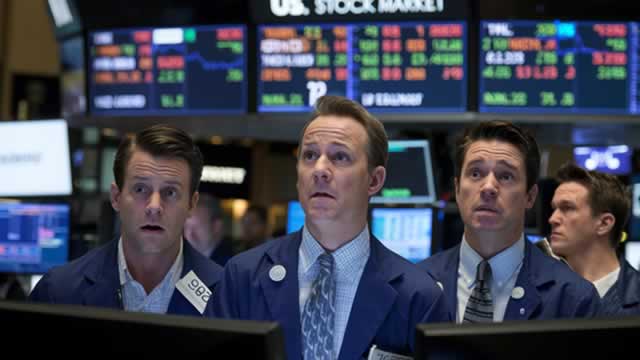
The energy historian Daniel Yergin is an expert in past oil shocks in the Middle East.

President Javier Milei aims on Tuesday to persuade investors that Argentina's economic turnaround can stay on track even as war in Iran pushes oil prices higher, strengthens the dollar and rattles emerging markets.

Existing home sales were down 1.4% last month from February 2025. At the current sales pace, there is a 3.8-month supply of homes for sale.
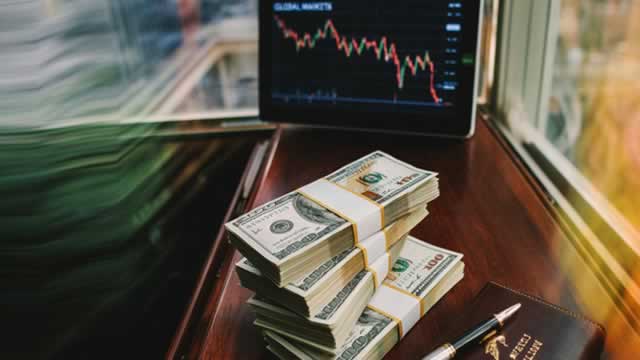
Boaz Weinstein, founder of Saba Capital Management, said the problems in private credit are "multiplying by the quarter." Saba, alongside Cox Capital Management, launched a tender offer to purchase 6.9% of shares in one of Blue Owl's nontraded private credit funds at a 34.9% discount.
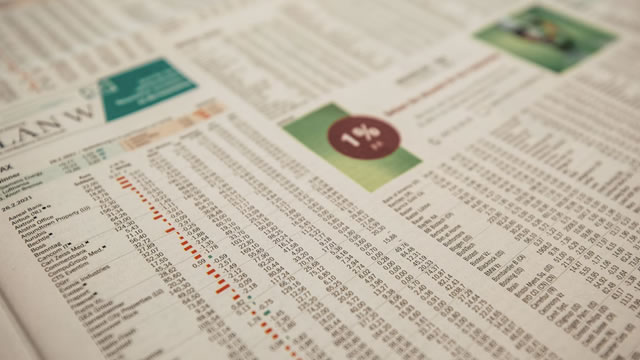
US stocks traded mostly unchanged on Tuesday as investors monitored volatile oil prices and closely followed developments in the escalating conflict involving Iran. The Dow Jones Industrial Average slipped 62 points, or 0.1%.
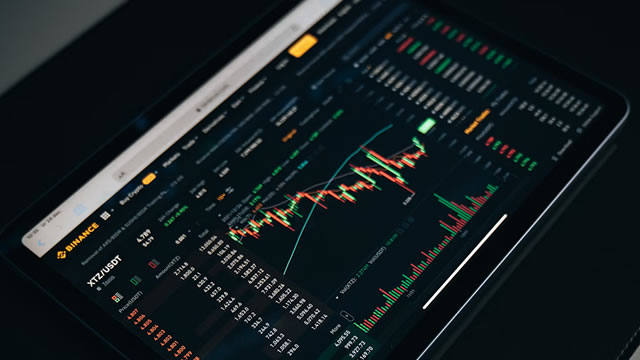
President Trump maybe getting ready to wind down the war, but Iran isn't.
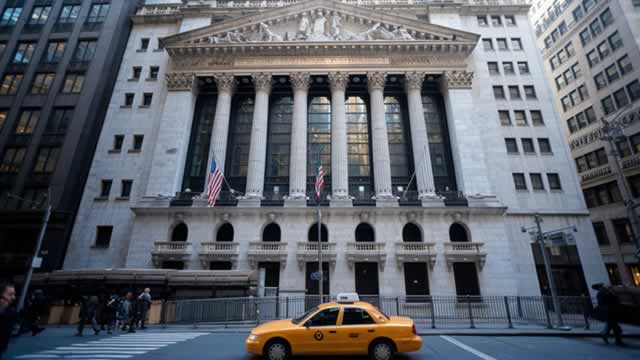
I focus on AURA (Assets Underestimated, Resilient & Agentic) companies, which are undervalued due to market overreaction to AI disruption fears. The HALO trade—favoring heavy, capital-intensive assets—has driven indiscriminate selling in software, despite many firms showing rising earnings and robust fundamentals.
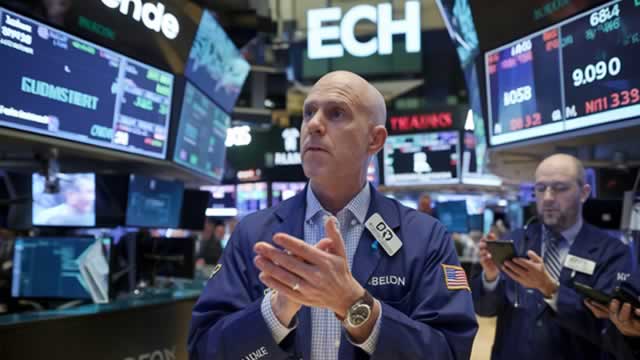
Central and Eastern Europe has become more resilient to energy supply shocks following efforts to diversify sources since Russia's invasion of Ukraine in 2022, providing buffers against the economic impact of the war in the Middle East, S&P Global said on Tuesday.

"We'll continue to invest significantly in the US and US dollar denominated assets," Temasek CEO Dilhan Pillay Sandrasegara says during a discussion with Bloomberg's Lisa Abramowicz at Bloomberg Invest. -------- More on Bloomberg Television and Markets Like this video?

The whipsaw moves in South Korean stocks last week were examples of a textbook bubble, Bank of America's equity strategists say.

Oil prices are the key barometer for the Middle East conflict's market impact and its resolution. President Trump's pivot toward de-escalation triggered a sharp reversal in stocks, bonds, and oil prices.

US futures were pointing to a softer open on Wall Street on Tuesday, as markets calibrated their reaction to comments from the US government about the Iran conflict. Dow Jones and S&P 500 futures were down 0.3% and those for the Nasdaq slipped 0.2%, with larger gains earlier pared as fresh signals from Washington suggested the conflict with Iran is not yet over.

Treasury yields were little changed as the Trump administration said the war in Iran is near an end but not quite there yet.
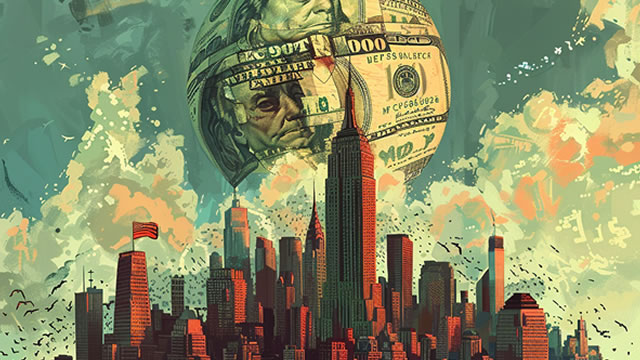
European equities stage a rebound amid renewed hopes for de-escalation in the Middle East.

This is a developing story.

Oil recently experienced its most successful week since April 2020. WTI achieved its largest weekly increase in futures history, going back to 1983.

As data center development fuels an unprecedented wave of large-load customer contracts, US electric utilities are emphasizing long-term spending and growth visibility over quarterly financial benchmarks. Avista and NorthWestern both project 4% to 6% long-term EPS, though NorthWestern expects that range to increase to 5% to 7% after its planned merger with Black Hills Corp. closes later in 2026.

Brent crude reaching $150 simultaneously boosts production in the Western Hemisphere, accelerates alternative energy initiatives, and reduces demand in energy-intensive sectors and Emerging Market importers – ultimately paving the way for its own correction. Historical trends indicate that it corrects in one of two manners: within 60 days or over a span of 6 years.
One popular adage with investors is "follow the money." And the best performing mutual funds are tipping their hands to their actions.

Barclays says the chasm between winning and losing stocks in 2022 when Russia invaded Ukraine was huge. Here are their style picks.

President Donald Trump sees the war in Iran ending ‘very soon,'adding that oil prices will decline quickly and shipping traffic through the Strait of Hormuz would return to normal.

After rising to nearly $120 per barrel early on Monday, the global benchmark Brent Crude Intermediate fell sharply below $90 as President Donald Trump signalled that the war with Iran could be nearing completion. However, crude index remained volatile, rising to around $92 per barrel early on Tuesday.

A board games developer is set to become the first company to list its shares on Britain's new private stock market later this month, in a deal that will take place on a rival platform to that operated by the London Stock Exchange.

Bill Ackman's Pershing Square files for IPO on the NYSE

The Middle East conflict is causing a supply chain shock. Energy prices have spiked, and we don't see a basis to disagree given what we know now.

Amid escalating tensions in the Middle East involving U.S., Israeli, and Iranian forces, oil prices have surged, and global markets have turned volatile.

U.S. stock futures rose and Treasury yields slid as traders took encouragement from Trump's comments that the conflict in Iran would end very soon.

Macroeconomic and sector-specific issues vary significantly. Despite increased complexity around geopolitics, tariffs, and trade, markets, until recently, have been reaching new highs.
The open-source AI assistant can make and carry out decisions on the user's behalf, and has become a hit in China's tech community.

The drug maker says its treatment of a rare kidney disease met its main goal in a late-stage trial.

Markets have been hit by several recent news events that point to a rapidly deteriorating credit market, particularly private credit. The current credit environment feels eerily similar to that of 2007, just before the Bear Stearns implosion in March 2008, which helped trigger the Great Financial Crisis.