Baseball legend Yogi Berra once joked, “The future ain't what it used to be.” The quote is meant to be funny, but it also captures something important about financial markets: investors often assume the worst when uncertainty rises.
Despite fading consumer confidence, the restaurant industry appears positioned for its best performance in years. Valuations for restaurant stocks are approaching decade lows, which could make the sector an enticing value play if markets continue wobbling.
Bullish sentiment decreased 1.1 percentage points to 31.9%. Neutral sentiment decreased 9.7 percentage points to 21.7%.
Focus on stocks that are stable when investors flee to safety and stock-market liquidity dries up.
Global asset manager T. Rowe Price Group Inc (NASDAQ: TROW) has expanded its ETF lineup with the launch of the T.
Major US stock indexes slid 1% due to a volatile combination of escalating geopolitical instability in the Middle East and mounting jitters within the $2 trillion private credit market. Crude oil prices surged toward $100 per barrel after tanker attacks in Iraqi waters and Iranian threats to keep the Strait of Hormuz closed.
After three years of actual returns for the S&P 500, it would be safe to assume that just a “reversion to the mean” type year for the S&P 500 would be single digits, either mildly negative or mildly positive. Iran has changed the 2026 investment landscape entirely, and has tossed a wrench into the “rotational” trade that made sense, at least until the air strikes.
Hedge funds might be betting on the fact that market declines triggered by geopolitical shocks tend to reverse rather quickly.
Amid all the turmoil, there are still some areas of the market that can provide some comfort for investors, even those that in recent years were the source of Wall Street's angst.
The last thing investors are thinking about right now -- as Wall Street wrestles with surging oil prices -- is a short squeeze.
As the war in the Middle East deepened on Thursday, an important Wall Street gauge was reflecting the kind of inflation fears that the Trump administration would rather avoid before midterm elections.
Interest rates are breaking out, driven by surging oil prices acting as a catalyst. Oil and interest rates have shown a strong correlation in recent years, reinforcing this dynamic.
The U.S. economy continued to show resilience at the start of 2026, even as consumer sentiment, geopolitical issues, and a softening labor market presented a mixed backdrop. U.S. consumer confidence fell sharply in January, dropping to its lowest level in nearly a decade.
Next week brings the Federal Open Market Committee's (FOMC) interest rate decision, which will be closely watched as inflation concerns swirl in response to the the U.S.-Iran war.
Prediction markets - one of the hottest U.S. asset classes over the past year - need tighter rules that clearly separate outcome-based financial contracts from event wagers that amount to gambling, the head of a major exchange operator told Reuters.
The central bank has heavily foreshadowed a rate cut on March 18. However, the escalating war in the Middle East may throw cold water on those plans, and Brazil's market rally.
Geopolitical conflict between Iran, Israel, and the US is the dominant short- to medium-term market driver, with oil supply disruption as a key risk. Iran's strategy centers on destabilizing global energy markets by blocking the Strait of Hormuz, aiming to induce inflation and economic strain on Western economies.
Federal Reserve chairman nominee Kevin Warsh's chances of getting quickly confirmed by the Senate looked as gloomy as the weather in Washington as he met with more lawmakers in a bid to bolster his chances. Warsh is unlikely to get a vote by the full Senate if Sen.
Markets were far too confident the war would be short, and are slowly adjusting to a longer conflict. This isn't a time to be confident about the outcome.
A surge in the price of fertilizer is sending shares of U.S. producers soaring, while forcing farmers into tough choices ahead of spring planting.
The longer the U.S.-Iran War drags on, the bigger the risk to Wall Street, argues @CharlesSchwab's Cooper Howard. Developments in the Middle East are the primary focus for Cooper moving forward as he sees them being the key catalysts to market moves in equites and fixed income.
The war in Iran has roiled the outlook for financial markets and the global economy. But commodities are clearly benefiting from the turmoil as prices rise for energy and other raw materials.
US stocks plummeted Thursday as oil prices hit $100 again and Iran's new supreme leader vowed to keep the Strait of Hormuz blocked – meaning prices could stay higher for longer.
Cathie Wood‘s Ark Invest makes trades across its ETFs every trading day. Those trades are sometimes closely monitored by investors when they involve new stock picks or large trades.
Large bank capital requirements will fall slightly under revised drafts of sweeping bank capital rules, Federal Reserve Vice Chair for Supervision Michelle Bowman said Thursday, in a major victory for Wall Street lenders that beat back capital hikes under earlier drafts.
Sen. Martin Heinrich, D-N.M., introduced a bill to create a new tax rebate for individuals and families impacted by the cost of President Donald Trump's tariffs.
Oil's surge above $100/barrel is a macroeconomic threat, driving inflation risks, stagflation fears, and global market instability. Three scenarios—quick exit, prolonged friction, and severe disruption—frame oil's impact: from temporary shocks to sustained inflation and economic drag.
Markets hate uncertainty, and right now there's plenty to go around. The outbreak of the U.S.-Iran conflict, following by Iranian retaliation against oil infrastructure across the Persian Gulf, has sent crude prices surging and shipping rates soaring to record levels.
Steven Major, global macro advisor at Tradition Dubai, says the global bond market seems to be pricing in a lot of stagflation risk. -------- More on Bloomberg Television and Markets Like this video?
The S&P 500 has experienced a relatively stable period of order since the end of the fourth quarter of 2023. As of the close of trading on March 11, 2026, the level of the S&P 500 is just a short distance from its central mean trendline.
The past week has been marked by a sudden and unexpected escalation in the Iran conflict, adding a new layer of uncertainty to an already complex macro backdrop. Geopolitical shocks of this nature can reverberate quickly through markets.
Shares of fertilizer stocks are trading higher Thursday amid concern that the ongoing closure of the Strait of Hormuz will limit exports from key Middle East producers Saudi Arabia and the UAE.
US stocks declined Thursday as oil prices extended their rally amid escalating conflict involving Iran and growing concerns about disruptions to global energy supplies. The Dow Jones Industrial Average dropped 547 points, or 1.2%.
U.S. stocks traded lower this morning, with the Dow Jones falling more than 500 points on Thursday.
Much has changed in the U.S. economy since Donald Trump became president again a year ago, but one thing has stayed the same: High U.S. trade deficits.
It may be weeks before the U.S. can escort tankers through the Strait of Hormuz. That's the good scenario.
"Once we start seeing free-flowing oil again," Wall Street will set the foundation for its rebound, argues Kevin Mahn. That said, he says "I'm surprised markets haven't pulled back even more," a "helpful" sign for stock market strength.
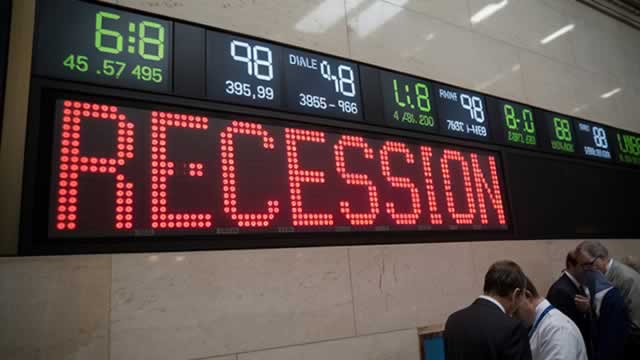
Although the notion that the ‘Great Recession 2026' has either already started or is imminent appears, at face value, as a mere continuation of fruitless predictions about a new Great Depression in 2025, or a massive stock crash in 2024, there is mounting evidence that the financial markets are breaking.
Applications for US unemployment benefits edged down last week as initial claims decreased by 1,000 to 213,000 in the week ended March 7. Meanwhile, the US trade deficit narrowed in January as exports increased, with the gap in goods and services trade shrinking more than 25% from the prior month to $54.5 billion.
Fertilizer stocks are advancing amid the Strait of Hormuz closure.
The deficit of $54.5 billion continues a volatile run as imports and exports react to rapid shifts in the Trump administration's trade policy.
A Point72 team scored hundreds of millions of dollars in gains, while a smaller firm is closing after losing money on software stocks.
The escalating Middle East conflict and the closure of the Strait of Hormuz are driving oil prices higher, fueling inflationary pressures across sectors. Current policy responses, including record emergency oil releases and production boosts, are insufficient to offset lost supply and rising gasoline prices.
The number of people who lost jobs and applied for unemployment benefits in the first week of March stayed low, the Labor Department said Thursday.
The number of people who filed for unemployment benefits was 213,000 in the week through March 7, lower than the 214,000 reported a week earlier.
Joseph Stiglitz says the four horsemen of the economic apocalypse are nearing.
The data showed imports dipped and exports rose in the month before the Supreme Court struck down most of the president's tariffs.
Vietnam is expected to be promoted to ‘emerging' market from ‘frontier' market. Here's when you'll need to act.