
3/18, 9:47 AM
Oil Prices Swing On Middle East News. Iraq Exports, Iran Targets In Focus.
Oil prices reverse from early slide. Iran expands list of targets, South Pars natural gas field hit.
investors.comRead Article →
Global economic updates, market sentiment, and financial headlines.

U.S. stocks traded lower this morning, with the Dow Jones index falling more than 150 points on Wednesday.
Oil prices reverse from early slide. Iran expands list of targets, South Pars natural gas field hit.
The federal court's halt of proposed childhood immunization schedule changes preserves stable, high-volume revenue streams for major vaccine manufacturers like Pfizer, Merck, Moderna, GSK, and Sanofi. Blocking the policy reversal maintains routine coverage for 17 diseases, safeguarding predictable insurance reimbursement and near-universal pediatric vaccine uptake.
US stock opened lower on Wednesday after hotter-than-expected inflation data and rising oil prices dampened investor sentiment ahead of the Federal Reserve's policy decision. Dow Jones Industrial Average fell about 169 points, or 0.36%, while S&P 500 fell 0.31% and Nasdaq 100 declined roughly 0.26%.

The market remains resilient despite high oil prices, anticipating a near-term ceasefire in the Middle East and limited economic fallout. WTI crude under $100 per barrel is seen as a stabilizing factor, with further de-escalation likely to trigger market upside.
Wholesale inflation hit the highest rate in a year last month, adding evidence that stubborn price increases persisted in the economy even before the Iran war began.
Since the attack began on Feb. 28, nearly every major asset class - aside from commodities and cash - has slipped into the red, with losses spreading broadly across global markets through March 17's close. A broad measure of raw materials has surged 4.7% since the war began, sparked by soaring energy costs as the conflict restricts oil and natural gas exports from the Persian Gulf region - a supply shock that's spilled over into other commodities.

Wholesale prices rose 0.7% in February, much more than expected

The cost of wholesale goods and services rose at an accelerated pace in February for the third month in a row, underscoring the challenge faced by the Federal Reserve in vanquishing inflation even before the recent spike in oil prices.

Dividends by the Numbers series tracked the US stock market's dividend metadata, which provided a simple, near real-time method of measuring the relative health of the US economy. We've opted to focus on dividend decreases because that data can provide a raw indication of which companies and industries may be experiencing some kind of distress.
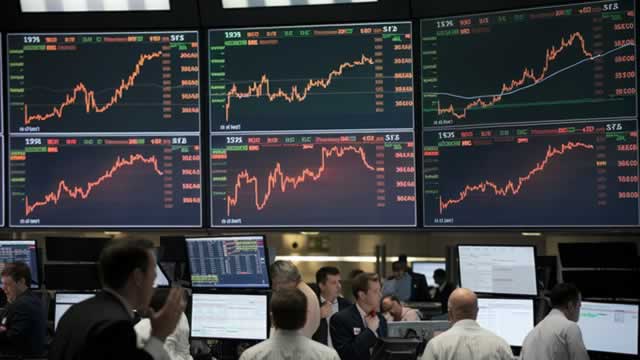
The Federal Reserve meeting will show whether inflation fears trump a soft job market amid the Iran war.

Oil prices, on average, will remain around $88 a barrel six months from now, according to the CNBC Fed Survey. On average, respondents forecast 1.8 rate cuts this year, a more dovish outlook than the Fed futures market, which has priced in only one cut.
History suggests the second half of March is a winner for the stock market.

U.S. Treasury yields fell ahead of the Federal Reserve's meeting where the fed funds target rate range is expected to be left on hold.

During times of turbulence and uncertainty in the markets, many investors turn to dividend-yielding stocks. These are often companies that have high free cash flows and reward shareholders with a high dividend payout.

The S&P 500 has become a value trap due to mega-cap concentration, AI CapEx risks, and new inflation headwinds, warranting a shift in strategy. I expect subdued returns for the cap-weighted S&P 500, not outright losses, as higher discount rates and structural inflation pressures compress multiples.

US stock futures edged higher on Wednesday as investors turned a bit optimistic with reducing oil prices ahead of the Federal Reserve rate decision today. Futures linked to the Dow Jones Industrial Average were up about 240 points, or 0.5%.

A trading expert is warning that the S&P 500 is approaching a critical technical juncture that could determine whether the broader market remains in a long-term uptrend or slips into a new bear cycle.

Given the backdrop of war and oil price volatility, investors' focus later today will be on whether Federal Reserve officials consider the inflationary implications of the oil shock significant enough to alter their forecast for one U.S. interest rate cut this year.

The most oversold stocks in the energy sector presents an opportunity to buy into undervalued companies.

Plus, Nvidia chips for China.

Wall Street banks are set to score a win as President Donald Trump's regulators unveil softened new draft capital rules this week, but there could still be fresh technical and political challenges ahead for the contentious project.
Stock markets have been volatile since the Iran war started, but one in particular has stood out.

Oil checked recent gains and stock markets pushed higher as markets adopted a calmer footing ahead of the Federal Reserve's policy decision later Wednesday.

The Epstein files show how easily the sex offender collected confidential information from his well-connected associates.

Oil checked recent gains and stock markets pushed higher as markets adopted a calmer footing ahead of the Federal Reserve's policy decision later Wednesday.

A first-half rate cut remains on the table, given increased economic and geopolitical risks, but the other side of the story is that economic conditions remain generally constructive with healthy YoY growth and slowing inflation. The market rotation into cyclicals is backed by fundamentals, but AI and automation technologies are likely critical to meeting mounting expectations.

Treasury yields move lower as attention turns to Fed rates decision

Major cryptocurrencies were down ahead of Wednesday's Fed rate decision. Investors will pay close attention to official statements.

Asian equity markets advanced broadly on Wednesday after a positive lead from Wall Street overnight, while oil retreated but stayed high as the conflict in the Middle East continued.
The U.S. Global Jets ETF is often used by investors as a practical proxy for the publicly traded airline industry. Short interest in an ETF like JETS tends to rise when investors want a single, scalable instrument to express a view on the sector without needing to select individual carriers.
The CNN Money Fear and Greed index showed almost no change in the overall fear level, while the index remained in the “Extreme Fear” zone on Tuesday.

Cresset Capital founding partner Jack Ablin analyzes where the economy is headed on 'The Claman Countdown.' #fox #media #breakingnews #us #usa #new #news #breaking #foxbusiness #theclamancountdown #economy #markets #stocks #investing #finance #growth #interestrates #inflation #economic #wallstreet #business #money #trading #jackablin #analysis #market#markettrends

The risk is that the war lasts longer than expected, and that the shipping industry takes even longer to recover. The recent weakness in financial markets could be an amuse-bouche before a bearish feast.
NBIM CEO Nicolai Tangen discusses the risks posed by high energy prices, geopolitical uncertainty and potential AI-driven market imbalances.
Asian equities were mostly higher overnight as Thailand and Korea outperformed, while Mainland China and Japan underperformed. Trump has requested a one-month delay to his trip to China to meet with President Xi.
The nominee still doesn't have a Senate confirmation hearing date, although Jerome Powell's term as chair technically ends May 15.
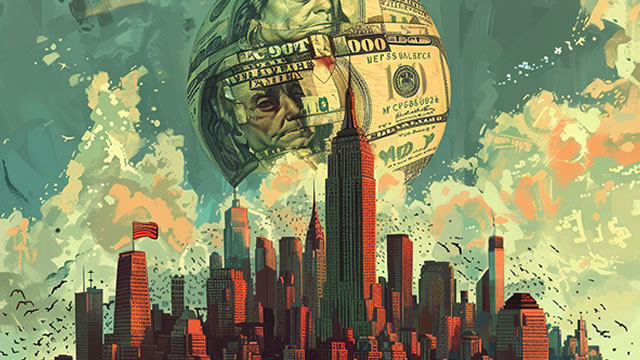
As many as three governors are candidates to dissent at this week's meeting, an unusual break that offers a glimpse of the fracture Kevin Warsh stands to inherit.
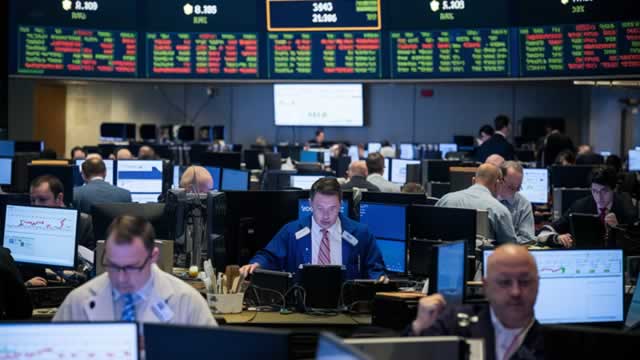
Oaktree Capital Management co-founder Howard Marks warns about "credulousness" being on the rise when asked about the issuance of long-term debt by Big Tech during a fireside chat with Bloomberg's Lisa Abramowicz at the Capital Markets Industry Conference. -------- More on Bloomberg Television and Markets Like this video?

Stocks rose for a second straight day. Plus, Jerome Powell is set for his penultimate meeting as Fed chair.
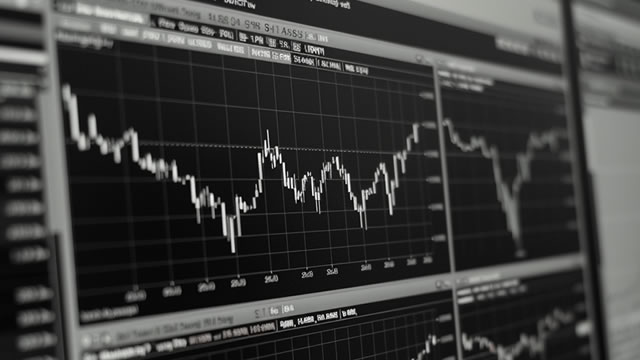
CNBC's Jim Cramer talks about the day's market action and focuses on the tech trade from Nvidia's GTC conference in San Jose, California.

Stocks rose Tuesday even as oil climbed, signaling investors are shifting focus back to strong fundamentals despite geopolitical uncertainty. Jim Cramer highlighted rebounds in airlines, private equity and software as evidence the market may have overreacted.

Small caps outperformed in the stock market Tuesday, but overall gains were mild. Micron broke out with earnings due late Wednesday.

Stagflation risks are growing increasingly prominent for the U.S. economy and equity markets in 2026. Persistent inflation and slowing growth are converging, raising concerns about economic stagnation.

Tanker traffic through the Strait of Hormuz remains largely paralyzed.

U.S. crude stocks rose last week while fuel inventories fell, market sources said, citing American Petroleum Institute figures on Tuesday.

US stocks ended higher on Tuesday, extending gains from the previous session as investors weighed rising oil prices, geopolitical tensions in the Middle East, and the start of the Federal Reserve's two-day policy meeting. The S&P 500 rose 0.25% to close at 6,716.09, while the Nasdaq Composite gained 0.47% to 22,479.53.

Rental market shows continued cooling as asking rents fall for 30th straight month, with all 50 major metro areas remaining below pandemic peaks.
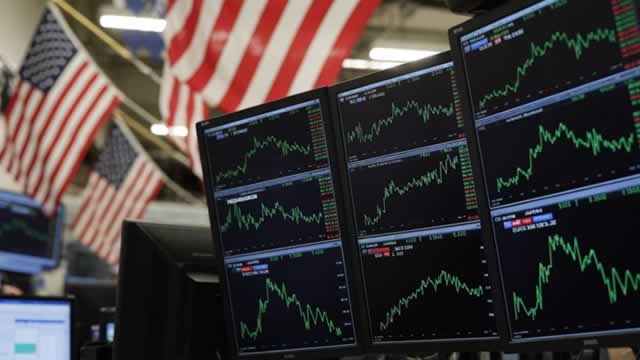
Matt Orton, Raymond James chief market strategist, joins 'Power Lunch' to discuss if geopolitics is creating market noise, the broadening out in market performance and much more.