
3/23, 9:51 AM
Oil Prices, Treasury Yields Fall On Trump's Five-Day Reprieve; S&P 500 Leaps
Oil prices in Europe are still over $100 a barrel.
investors.comRead Article →
Global economic updates, market sentiment, and financial headlines.

Delta, American and United Airlines jump. Travel stocks rally as Trump delays Iran strikes.
Oil prices in Europe are still over $100 a barrel.

Oil prices in Europe are still over $100 a barrel.

US equities fell for a fourth week through Mar. 20, but the decline has been orderly so far. Financial markets are forward‑looking pricing systems, continually scanning for indications that the future may diverge - however slightly - from current conditions.

Chicago Fed President Austan Goolsbee told CNBC on Monday that he's more worried about inflation now than unemployment, even with apparent progress made on the war with Iran. Following Monday's war news, traders, in volatile market action upped bets of a rate hike by the end of the year but still expect a cut in 2027.

US stocks opened higher on Monday, after President Donald Trump signaled a potential de-escalation in tensions with Iran by postponing planned military strikes on key energy infrastructure. The Dow Jones Industrial Average index jumped as much as 653 points, or 1.4%, while S&P 500 rose 1.3% and Nasdaq-100 gained 1.5%.

U.S. stocks powered higher in early Monday trading, but remain in halfway towards correction territory with weakening fundamentals, following a surprise de-escalation of America's military efforts in the war with Iran from President Donald Trump.

Federal Reserve Governor Stephen Miran says it's too soon to tell how higher oil prices will impact other prices. He speaks on "Bloomberg Surveillance.
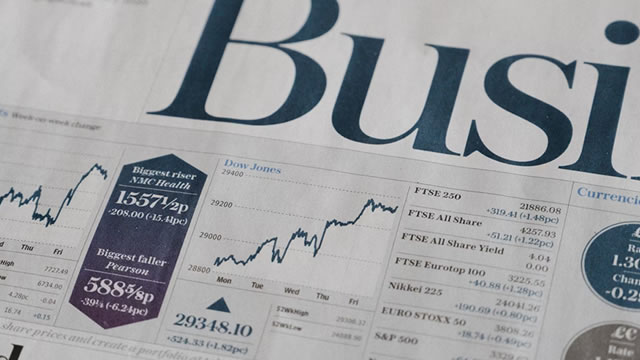
The Federal Reserve may need to tighten monetary policy in response to oil prices' impact on the U.S. economy, said Chicago Fed President Austan Goolsbee.

US stock futures rallied and oil prices tumbled Monday morning after President Trump announced a five-day pause on plans to strike Iranian power plants after talks with Tehran.

The S&P 500 dropped 1.9%, or 125.73 points, below its previous week's close to end the third trading week of March 2026 at 6,506.46. The escalation of oil and gas prices resulting from the Islamic Republic of Iran's efforts to shutter oil container ship traffic through the Strait of Hormuz continued to set the big economic stories of the week.
Market volatility is driven by President Trump's unpredictable Middle East conflict messaging, with oil prices nearing $100 and the risk of stagflation rising. Equity markets are deeply oversold, with the S&P 500 surrendering its 200-day moving average and over 70% of constituents down 20% or more.

Thomas Hayes sets the table for Monday's trading action by attributing the market reaction to headlines on President Trump and Iran as "very much like" 2025's tariff volatility. He explains what he learned from last year's moves and offers advice for investors when it comes to derisking and finding new market opportunities.
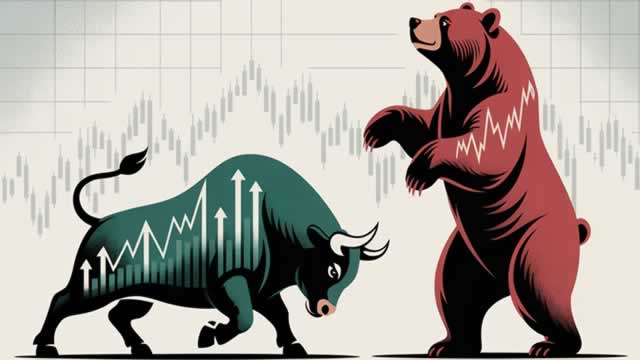
Wall Street stocks are expected to start the week sharply higher after President Donald Trump claimed the US and Iran had held productive talks toward ending the conflict in the Middle East, even as Tehran flatly denied any contact had taken place. Dow Jones futures were up 1.6%, S&P 500 futures gained 1.5% and Nasdaq futures 1.45%, reversing out of the red into the green after Trump's posted on Truth Social that he had instructed the Department of War to "postpone any and all military strikes against Iranian power plants and energy infrastructure for a five day period, subject to the success of the ongoing meetings and discussions".

Futures saw volatile action within a couple hours prior to Monday's opening bell. Stocks initially rallied after President Trump said there were constructive talks with Iran over the weekend — comments that were denied by Iran itself.
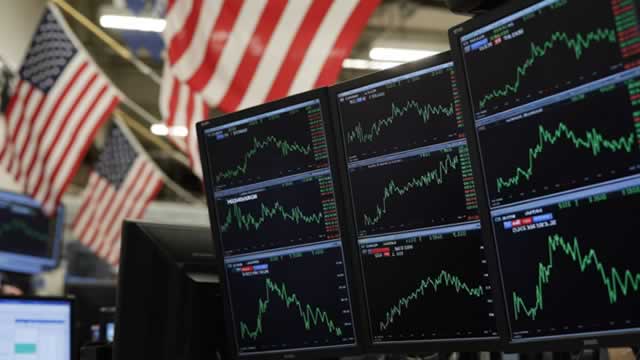
The 200-day moving average is the single most widely followed technical level in global financial markets, and the reason isn't mystical; it's institutional. On March 19, the S&P 500 closed below its 200-DMA for the first time since May 2025.

Following a record-breaking fourth quarter, AEO's Benzinga Edge Stock Rankings‘ value score rose week-on-week from 88.87 to 89.71. This upward shift in relative worth comes in stark contrast to the stock's recent market action, where shares have tumbled 34.70% year-to-date.

Investors responded to President Trump's latest threat, vowing to target power plants if the Strait of Hormuz isn't reopened. Meanwhile Iranian leadership warns it will respond by targeting energy and water facilities in the Gulf.
Dimitar Radev, Governor of the Bulgarian National Bank and ECB Governing Council member, discusses the ECB's latest decision to keep interest rates unchanged, the outlook for potential rate hikes amid geopolitical uncertainty, and Bulgaria's path toward adopting the euro.

US stock futures witnessed a sharp jump on Monday after US President Donald Trump said Washington and Tehran had held “productive” talks over the past two days . Dow Jones Industrial Average futures jumped 1,100 points, or 2.6%, while S&P 500 futures rose 2.7% and Nasdaq-100 futures gained 2.7%.

The U.S. will postpone strikes for five days following discussions between the two countries.

Iran war has sparked a supply chain mess, Trump sends ICE to airports, Musk unveils Terafab AI chips project, and more news to start your day.

I am adopting a HOLD stance due to heightened geopolitical risk around the Strait of Hormuz and the potential for an energy crisis. Historical precedent suggests a severe oil shock could trigger stagflation, prolonged market underperformance, and a decade of flat or negative real returns.

What matters in U.S. and global markets today

A bipartisan pair of U.S. senators are introducing legislation to prohibit CFTC-regulated entities from listing contracts related to sporting events.

Oil rose again and Treasury yields jumped as markets responded to weekend developments in the Middle East.

Canadian energy stocks. Impact of AI on Canadian markets.

EXCLUSIVE: As investors jettisoned expectations for rate cuts in Europe following the outbreak of war in Iran, the National Bank of Poland lowered borrowing costs, underscoring its confidence inflation will remain contained.

Hedge funds last week piled into bets against U.S. shares and emerging markets stocks in Asia, while wagering that European shares would rise, said a Goldman Sachs note to clients seen by Reuters on Monday.
Anna Edwards, Lizzy Burden, Tom Mackenzie and Mark Cudmore break down today's key themes for analysts and investors on "Bloomberg: The Opening Trade." Chapters: 00:00:00 - MLIV 00:00:02 - Iran War: Gold, Silver Price Drop 00:02:21 - Dollar Rises 00:03:03 - Extended Stock Selloff, S&P Futures -------- More on Bloomberg Television and Markets Like this video?

President Trump threatened to 'obliterate' Iran's power plants if it doesn't reopen Hormuz by Monday evening; Tehran said it would retaliate

The week opened with a bearish gap, as Nasdaq futures (NQ) moved lower compared to the previous Friday close. Price entered the 24,258.50–24,313.00 support zone, where strong demand appeared and initiated a move higher.

The surge in Brent oil prices above $100, now sustained for over a week, has shifted the macro narrative from a temporary geopolitical shock to a potentially persistent inflation risk. While markets remain split, with equities signaling resilience and rates pricing caution, the Federal Reserve faces a more complex trade-off between supporting growth and containing inflation.

Is this stock market correction the beginning of a bear market? If you missed the non-US stock surge last year, should you be buying this dip?

Oil prices jumped, while Asian equities and government bonds fell across the board.

European stocks are expected to start the new trading week sharply lower as the war in Iran drags on global market sentiment.

The CNN Money Fear and Greed index showed an increase in overall fear, while it remained in the “Extreme Fear” zone on Friday.

U.S. Energy Secretary Chris Wright and Interior Secretary Doug Burgum discussed everything from raising domestic oil output to opportunities in Venezuela with energy executives in Houston on Sunday amid the world's worst supply disruption, due to the U.S.-Israeli war on Iran.

Richard Bernstein Advisors CEO and CIO Richard Bernstein offers insight on investment strategies during conflict and rising inflation on 'Barron's Roundtable.' #fox #media #breakingnews #us #usa #new #news #breaking #foxnews #barronsroundtable #economy #inflation #investing #stocks #market #finance #taxes #war #global #strategy #business #wealth #richardbernstein #bernstein #money #trade
I remain bullish on US growth stocks, advising against panic selling or moving entirely to cash despite current market volatility. International equities have underperformed US stocks over the long term; recent currency and energy dynamics reinforce the case for US market leadership.
We think the recent correction in gold mining stocks presents a timely buying opportunity. The 2-year yield has risen the most, up a full 50 basis points, reversing the recent inversion at the short end of the curve.
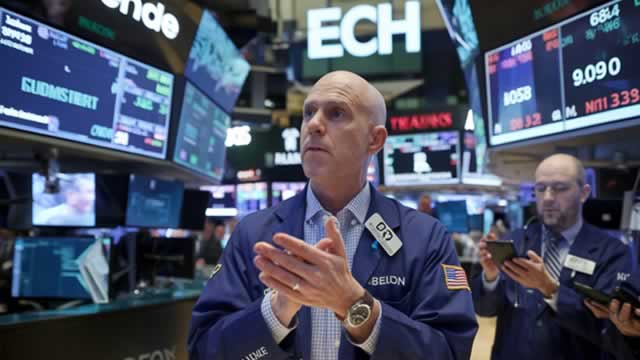
Federal Reserve Board Gov. Michelle Bowman discusses where interest rates are going and the job market performance on 'Maria Bartiromo's Wall Street.

U.S. stock-index futures fell on Sunday, as new threats of escalation from both President Donald Trump and Iran threatened to intensify the conflict roiling the Persian Gulf region.

The S&P 500 faces mounting bearish pressures from the Iran war and a coordinated hawkish shift by global central banks. Technical signals suggest a potential short-term bounce from the 6500 support area, but upside is likely capped near 6764–6775.
You'll experience losses when a bear market comes, but most active managers will do even worse.

The once-reliable trade on Wall Street, that President Trump “always chickens out,” could be torpedoed by the Iran conflict.

Macro pressure is intensifying as all five major central banks delivered restrictive decisions in the same week, with the Fed caught in a stagflation trap. Strategy added 22,337 BTC last week for $1.57 billion, bringing total holdings to 761,068.

Corporate executives on a recent CNBC CFO Council call expressed concern about the risk of a sustained rise in oil prices if the Strait of Hormuz closure is not soon resolved. President Trump issued a deadline for Iran to reopen the strait over the weekend, and the military has intensified attacks related to the closure, but the C-suite has set its own deadline for a reopening: about two weeks.

Historical data is suggesting that the stock market may ultimately emerge on top despite the recent volatility tied to the Middle East conflict involving the U.S., Israel, and Iran.