
3/24, 7:45 AM
NYSE Partners With Securitize to Develop 24/7 Tokenized Securities Platform
Under the exchange's plan, stocks would trade as digital tokens.
wsj.comRead Article →
Global economic updates, market sentiment, and financial headlines.
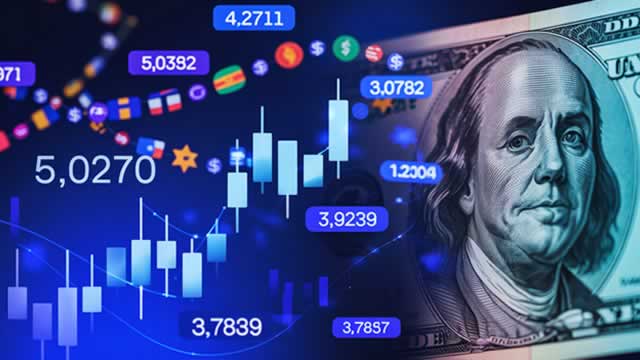
After decades as the world's reserve currency and the backbone of global trade, the U.S. dollar's dominance is being tested. The euro is the obvious alternative, but does the data support that case?
Under the exchange's plan, stocks would trade as digital tokens.

After decades as the backbone of global trade, the U.S. dollar is being tested — could this finally be the euro's moment? CNBC's Annette Weisbach reports.

The springtime fate of shares could be determined over the next few days.
Downtrend confirmed, rally likely a trap: Dow Jones Industrial Average has broken below its 200-day moving average and fallen ~10% from its peak, with the recent “TACO” (Trump Always Chickens Out) rebound likely a dead cat bounce rather than a sustainable reversal. Macro risks not fully priced by equities: The VIX/MOVE ratio signals that bond volatility is dominating, implying interest rate and stagflation risks remain underpriced in equities, leaving room for further downside.
Another day of chaos for air travelers, Chevron CEO says energy markets should be more worried, cruise operators get a boost, and more news to start your day.

What matters in U.S. and global markets today

The most oversold stocks in the industrials sector presents an opportunity to buy into undervalued companies.

The price of bullion fell amid reports of heightened tensions between Saudi Arabia and Iran and as the U.S. dollar index rose.

U.S. stock futures were lower, European equities fell back and Asian indexes largely rebounded as investors struggled to find direction amid a glut of conflicting signals.
The beauty company confirmed merger discussions with Jean-Paul Gauthier owner Puig Brands.
U.S. stock index futures pointed to a lower open on Tuesday as renewed doubts over easing Middle East tensions tempered the previous session's relief rally despite President Donald Trump's decision to delay strikes on Iran's power grid.
A repeat of the 2008 crisis for defaults in private credit only impacts GDP growth by between one-fifth and one-half of a percentage point.

Anna Edwards, Lizzy Burden and Mark Cudmore break down today's key themes for analysts and investors on "Bloomberg: The Opening Trade." Chapters: 00:00:00 - MLIV 00:00:05 - Market Volatility, S&P Futures 00:01:36 - Strait of Hormuz Ultimatum 00:02:34 - Oil, Gas Prices -------- More on Bloomberg Television and Markets Like this video?
The 10-year Treasury yield rose on Tuesday as renewed volatility in oil markets and lingering Middle East tensions kept investors on edge.

Software stocks are down big YTD, but AI-targeted companies have signaled confidence through increased buyback announcements. Record YTD buyback authorizations suggest potential equity market support—but execution remains the wildcard.

The CNN Money Fear and Greed index showed almost no change in the overall fear level, while the index remained in the “Extreme Fear” zone on Monday.

The consumer-electronics company lowered its financial expectations and pulled midterm guidance after sales of its Beosound Premiere soundbar disappointed.
SABA Capital Management founder and CIO Boaz Weinstein discusses how investors should handle volatility and private credit on 'The Claman Countdown.' #fox #media #breakingnews #us #usa #new #news #breaking #foxbusiness #theclamancountdown #business #economy #markets #investing #stocks #finance #credit #privatecredit #volatility #trading #analysis #boazweinstein #londonwhale #banking #wallstreet
Sultan Al Jaber, the CEO of Abu Dhabi's National Oil Company has called disruption to the Strait of Hormuz “economic terrorism” threatening global energy supply. CNBC's Dan Murphy reports.

The agreement between Australia and the European Union was the result of almost eight years of talks. It's the latest move by U.S. allies to rethink economic ties amid deepening geopolitical uncertainty.
Stocks are powering higher on hopes the war will end soon. Keep an eye on oil prices.
Markets experienced broad-based weakness this week, with most major ETFs and sector benchmarks declining as investor sentiment remained pressured by persistent inflation concerns and heightened geopolitical uncertainty. Energy remained a relative outlier, supported by ongoing macro tailwinds, but overall market action reflects a cautious and risk-off environment where volatility continues to dominate investor positioning.

While it may feel like either ancient history or as though it was just yesterday, six years ago to the day, the S&P 500 put in its covid crash low. Since that low, the S&P has risen nearly 200%, with a number of huge moves under the surface driving those gains.
Slatestone chief equity strategist Erin Gibbs discusses the market's rotation of fear, highlighting geopolitical risks, private credit and artificial intelligence spending on ‘Making Money.' #fox #media #breakingnews #us #usa #new #news #breaking #foxbusiness #makingmoney #markets #stocks #economy #finance #investing #ai #artificialintelligence #technology #geopolitics #global #credit #privatecredit #risk #volatility #inflation #banking #business #politics #political #politicalnews #government
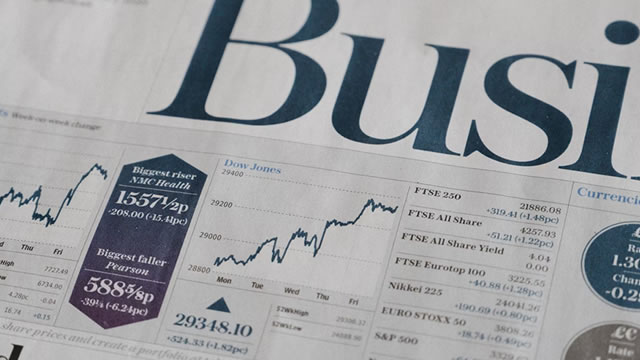
US stock benchmarks have formed a swift bottom since President Trump leaked US-Iran talk rumors, which could be getting confirmed. Prudent optimism is now slowly turning the wave on escalation fears in the Middle East.
Strategy Asset Managers CEO and managing partner Thomas Hulick reveals how investors should approach the market amid the Iran war on 'Making Money.' #fox #media #breakingnews #us #usa #new #news #breaking #foxbusiness #makingmoney #stockmarket #markets #investing #finance #economy #volatility #trading #iran #middleeast #war #global #energy #oil #inflation
Asian equity markets rebounded Tuesday, an abrupt U-turn from the prior day.
Investors should focus on earnings beats for companies for which the prior analyst consensus recommendation was Sell.
"What we're seeing today is the market getting a sigh of relief," says Chris Versace, referencing headlines on President Trump and Iran offering room for a technical bounce. He walks investors through his firm's investment strategies from when the strikes on Iran first occurred through Monday morning's Truth Social post from Trump pointing to a five-day ceasefire.
The Dow rose more than 600 points for its best day since early February. Oil's reset could still be slow going.
Japan's consumer prices rose at a slower pace in February, potentially affording the central bank more time to consider raising rates further amid heightened geopolitical risks.
The consumer price index fell to 1.3% last month, its lowest level since March 2022 and below the central bank's 2% target. It was down from 1.5% in January.

CNBC's Jim Cramer talks about the day's market rally.
Monday's big rally saw the Russell 2000 Index of small-cap stocks outpace the S&P 500's gains. The move extends a trend of outperformance from small-caps this year.
Investor fear gauges including the VIX have backed off their extremes, but remain elevated amid worries about the ongoing war in Iran. Tensions in the Middle East have driven crowding into trades perceived as "working" lately, according to Goldman Sachs.
Former National Economic Council director Gary Cohn discusses how conflict in Iran is impacting markets and how investors should respond to volatility on ‘The Claman Countdown.'
The S&P 500 faces an elevated risk of a bear market, with valuations near historic extremes and a potential correction of up to 50%. I see the current Shiller CAPE and technical indicators as warning signs, suggesting mean reversion could drive prices back to 2022 levels or lower.

CNBC's Jim Cramer explained why Monday's dramatic reversal in stocks might be temporary. The S&P 500 jumped over 1% after President Trump said that the United States would halt attacks against Iran's power plants and energy infrastructure.
The Dow Jones Industrial Average and other indexes rise in Monday's stock market after Trump signals 'productive' talks with Iran.
An increase in market volatility is driving ETF innovation around packaging ever-more complex strategies into single instruments. One example is the growth of strategies like managed futures.
Chip-equipment makers could benefit from Musk's plan to manufacture his own chips, analysts say — but the venture is still heavy on hype and light on specifics.
Former National Economic Council director Gary Cohn warns that markets are hanging on 'every word' as the U.S. war with Iran drives market volatility.
Alissa Coram and Ed Carson walk through Monday's market action and discuss key stocks to watch in Stock Market Today. Check out our daily newsletter!
Dynamic Beta Investments' Andrew Beer tells CNBC's Dominic Chu on “ETF Edge”: ‘No one has a playbook for this'. He discusses the ‘staggering implications' the Iran war could have on the global economy, and how traders are navigating the volatility.

"Bloomberg ETF IQ" focuses on the opportunities, risks and current trends tied to the trillions of dollars in the global exchange traded funds industry. Today's guests: Tushar Yadava, BlackRock Head of Markets for Model Portfolio Solutions, Dan Egan, Betterment VP of Behavioral Finance and Investing, Joel Schneider, Dimensional Fund Advisors' Deputy Head of Portfolio Management for North America, and Brittany Christensen, Tidal Financial Group Senior Vice President Head of Business Development.
I've seen this setup before (April 2-9, 2025), but this time I'm definitely not rushing to buy the dip. I believe the market is treating Trump's five-day delay like another backoff trade, even though Iranian officials denied talks and Israeli strikes continued today.

DoubleLine Capital CEO Jeffrey Gundlach told CNBC on Monday that the market is in a "reevaluation" phase. "It's hard to make money this year," Gundlach said.
The Reserve Bank of New Zealand has indicated it could raise interest rates if the surge in oil prices related to the Iran war drags on, threatening a sustained rise in inflation.